

 Facebook
 X
 Pinterest
 Copy Link
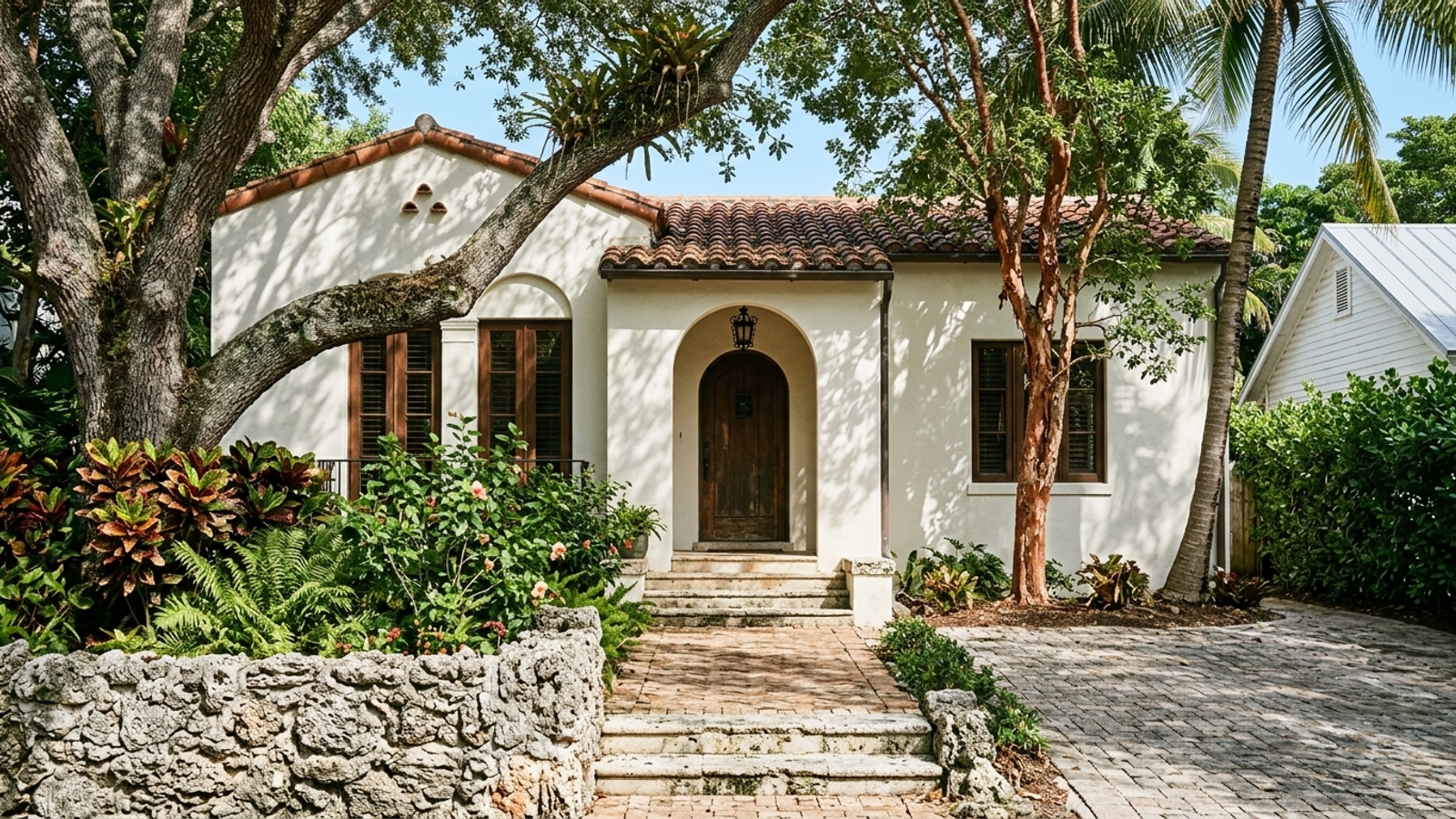
Living in Coconut Grove, the bayfront Miami neighborhood south of Brickell, means waterfront parks and a walkable village center in exchange for seven-figure home prices and real hurricane and flood exposure. The neighborhood’s older housing and protected tree canopy also shape what buying a home in Coconut Grove involves, from the inspection to any renovation plans.
Key Takeaway
Whether Coconut Grove fits comes down to three checks:
- the total monthly cost once flood insurance, windstorm insurance and property tax are added
- the flood zone of the specific address
- the peak-hour commute
Who This Guide Is For
Buyers and renters weighing a move to Coconut Grove from elsewhere in Miami-Dade or out of state who want the costs and risks before touring homes.
Side-by-side comparisons: vs South Beach, vs Coral Gables, vs Beach. Related guides: Retirement communities in Coconut Grove Miami, Is Coconut Grove Miami, FL safe, Weather patterns in Coconut Grove Miami, Moving to Coconut Grove Miami, Getting around Coconut Grove Miami, Things to do in Coconut Grove Miami, Schools in Coconut Grove Miami, Hospitals in Coconut Grove Miami, Cost of living in Coconut Grove Miami, History of Coconut Grove Miami, Job market Coconut Grove Miami, Utilities in Coconut Grove Miami.
Living in Coconut Grove at a Glance
- Median home value about $1.2 million; median rent near $2,000.
- Comfortable Miami income: about $108,000 single, $231,000 for four.
- Flood insurance required in A or V zones with federally regulated or insured lenders.
- Combined property tax about 20 mills; homestead deadline March 1.
- Crime index 149; check any address on CrimeMapping.com.
Pros and Cons of Living in Coconut Grove
The Pros
- Bay access: Biscayne Bay sits next to the neighborhood, with boating, sailing and waterfront walks.
- Walkable center: The village around CocoWalk puts shops, restaurants and entertainment within walking distance.
- Parks and history: Bayfront parks sit alongside a historic estate and a state park.
- Community events: Festivals and parades run through the year, so there is usually something on the calendar.
- Shorter commute: The drive to downtown Miami is shorter than from the outer suburbs.
- Healthcare nearby: Clinics operate inside the neighborhood, and a hospital is close by for emergencies.
The Cons
- Housing costs: Home prices and rents run well above the Miami-Dade median.
- Storms and flooding: Hurricane and flood exposure adds flood and windstorm insurance bills to the monthly cost.
- Property taxes: High assessed values mean large tax bills.
- Traffic: Peak-hour traffic stretches the commute downtown.
- Limited inventory: Few homes come up for sale at a time, so finding the right property can take a while.
Where Coconut Grove Sits in Miami-Dade County
Coconut Grove is a neighborhood of the City of Miami in Miami-Dade County, on Biscayne Bay, south of Brickell and east of Coral Gables. It is not a separate town. South Bayshore Drive and US-1 are the main routes through the area and into the urban core. As part of the city, it is covered by the Miami Police Department.
Population and Size
About 21,336 people live here, with a median age of 41. The neighborhood covers 5.6 square miles, with most commercial activity concentrated near the waterfront and the central village.
What the Crime Statistics Show for Coconut Grove
DoorProfit, a private site that compiles FBI Uniform Crime Reporting (UCR) and local law enforcement data, lists an overall crime index of 149 for Coconut Grove. That is 49% above the national average of 100. Its violent crime index is 129 and its property crime index is 121. Against the Miami average index of 79, Coconut Grove’s overall figure is 70% higher.
The index does not show conditions on a specific block. Property type, street lighting and nearby major intersections can shift the picture considerably.
Finding Official Crime Data
The Miami Police Department and the Miami-Dade Police Department publish crime mapping and data through the CrimeMapping.com portal. Search by the address or intersection of any property you are considering, not by neighborhood name, to see the types of incidents reported nearby.
Cost of Living and Housing Prices in Coconut Grove
Niche puts the median home value in Coconut Grove at $1,204,249, and another data aggregator places it higher, near $1.47 million. The median rent is $1,991 a month. Most residents own their homes, so rentals make up a smaller share of the housing.
For comparison, the median sale price for a single-family home across Miami-Dade County was $680,000 in August 2026, according to MIAMI REALTORS. Coconut Grove’s median runs close to twice that. For buyers, the gap means more competition and less room to negotiate on well-priced listings.
Income Needed for Coconut Grove
Income estimates for the neighborhood vary with the source and the boundary used:
- Northeast Grove: Census-based figures put median household income at $108,394.
- Whole neighborhood: Niche reports $162,518.
A SmartAsset analysis of the Miami metro, reported in March 2026, puts the income needed to live comfortably at about $108,000 for a single adult and about $231,000 for a family of four. Those are metro-wide figures. Add a specific home’s property tax and insurance before deciding what income it needs.
Property Taxes in Coconut Grove
Coconut Grove homes pay City of Miami, Miami-Dade County, school district, state and special-district levies on one bill. For tax year 2025, the combined rate inside the City of Miami is about 20.02 mills. That works out to roughly $2,002 a year for every $100,000 of taxable value.
Making the home your primary residence lowers that bill:
- Homestead exemption: Florida’s exemption removes about $50,000 from taxable value, though part of it does not apply to school taxes.
- Save Our Homes cap: Once a home is homesteaded, Florida Statute 193.155 limits yearly increases in assessed value to 3% or the change in the Consumer Price Index, whichever is lower.
- Filing deadline: The application goes to the Miami-Dade Property Appraiser by March 1 of the tax year. Missing that date waives the exemption for the year, unless a documented postal error caused the delay or a late application is filed within 25 days after the property appraiser mails the TRIM notice.
The assessed value resets to market value after a sale, so the seller’s tax bill is a poor guide to yours. The Miami-Dade Property Appraiser’s site shows current values and taxes for any address.
Community Life and Local Events
The King Mango Strut and the Coconut Grove Arts Festival are two regular events on the neighborhood’s calendar. Large events draw crowds from across Miami-Dade. Traffic and parking near the village center tighten on those weekends.
Climate, Hurricanes and Flooding
South Florida is warm year-round, and the Atlantic hurricane season runs from June 1 through November 30. Coconut Grove faces real exposure to hurricanes, storm surge and regular king tide flooding.
The West Grove sits at roughly 10 feet above sea level, higher than Miami Beach. Even so, water intrusion during heavy storms remains a consistent issue throughout the neighborhood.
Flood Zones and Insurance Costs
Check the flood zone of the exact address before making an offer. FEMA’s Flood Map Service Center at msc.fema.gov has an address search that pulls up the current flood map. Low-lying, bayfront parts of the Grove fall in high-risk zones starting with A or V, such as AE or the coastal VE. Higher inland lots may be in lower-risk Zone X. Zones are set parcel by parcel, so a neighbor’s zone tells you little.
Federal law requires flood insurance on a home in an A or V zone when the mortgage comes from a federally regulated or federally insured lender. The requirement starts at closing and lasts for the life of the loan. It can also begin later if FEMA remaps the property into a high-risk zone.
Homeowners and windstorm coverage is a separate bill. Industry data for coastal Miami-Dade single-family homes show these annual costs:
- Homeowners portion: about $4,000 to $8,000 a year.
- With windstorm coverage included: $5,500 to $12,000 or more a year.
- Some waterfront homes: above $18,000 a year.
When private insurers decline a property, owners may turn to Citizens Property Insurance Corporation, the state-created insurer of last resort.
Under Florida Statute 689.302, the seller must give you a flood disclosure at or before signing the contract. It covers known flood damage, past flood insurance claims and any flood assistance received. Get insurance quotes during the inspection period, because they change the monthly cost.
Parks, the Bayfront and Things to Do
Vizcaya Museum & Gardens and The Barnacle Historic State Park offer green space and historic architecture. Peacock Park and David T. Kennedy Park have open fields, walking paths, and direct views of Biscayne Bay. Dinner Key Marina has boat slips, and sailing and boating out of it are standard weekend activities.
Comparing Coconut Grove to Nearby Miami Neighborhoods
Brickell and Coral Gables are the most direct comparisons for buyers looking in this part of Miami.
Coconut Grove’s inventory runs toward historic single-family homes, modern estates, and mid-rise condos set into dense foliage. Downtown Miami and Brickell are high-rise condo territory with immediate access to the urban financial district. Coral Gables is a separate city, so an address there carries its own city tax rate and building rules rather than the City of Miami’s. When a search crosses that line, compare tax bills and listing prices home by home.
Cost and Commute
The premium in Coconut Grove pays for proximity to the bay at a lower density than the urban core. The Grove’s median value tends to buy a single-family lot here. That same budget in Brickell more likely gets you a luxury high-rise unit, with a different daily routine to match.
The drive into downtown Miami runs on US-1, which carries heavy volume during rush hour. Test it at 8 a.m. and 5 p.m. before you commit, because the peak-hour drive can run well past the map estimate.
Senior, Assisted and Sober Living Options Nearby
Most assisted living facilities serving Grove residents are elsewhere in Miami-Dade. The Palace at Kendall, Mirabelle in Dadeland, Golden Girls Home Inc. and Senior Assisted Living Inc. are in nearby areas, not inside Coconut Grove. Each offers different levels of medical supervision and daily help, and touring them is the only reliable way to compare care.
For recovery support, the Miami Behavioral Health Center Coconut Grove Branch operates in the neighborhood. Coconut Grove Recovery, despite its name, is in Miami Lakes. Local AA and NA groups also meet throughout the community.
Amenities by Life Stage in Coconut Grove
Schools and Parks
Coconut Grove is served by Miami-Dade County Public Schools (MDCPS). Boundaries are address-specific, don’t follow neighborhood lines, and can be changed by the district. Miami-Dade County’s School Board Buffer Viewer lets you search by address or intersection to see the zoned elementary, middle and high schools. For recreation, Alice C. Wainwright Park and Elizabeth Virrick Park offer playgrounds, sports courts, and open space for after-school and weekend use.
Healthcare Services
Local healthcare options include:
- Community Health of South Florida (CHI) Coconut Grove Health Center
- One Medical
- Med One Medical Center
- Americare Renal Center
For emergency services and specialized treatment, HCA Florida Mercy Hospital is nearby.
Frequently Asked Questions
Is the Tap Water in Coconut Grove Safe to Drink?
Yes. It meets EPA Safe Drinking Water Act standards and is treated and monitored by Miami-Dade County, though some residents filter it because of chlorine taste, PFAS concerns or aging plumbing in older homes. Have the plumbing checked during the home inspection.
Can You Live in Coconut Grove Without a Car?
Partly. Two Metrorail stations serve the area:
- Coconut Grove station: at 2780 SW 27th Avenue, on the western edge of the neighborhood.
- Douglas Road station: adjoining the area.
The City of Miami’s free Coconut Grove Trolley links both stations to the village core, Bayshore-area parks, Grove Central and City Hall. It runs Monday through Saturday from 6:30 a.m. to 11 p.m. Outside the walkable village center, most errands and the downtown commute usually mean driving.
Are Condo Fees and Special Assessments Rising for Coconut Grove Condos?
Two Florida rules push association costs up:
- Milestone inspection: Condo buildings three or more habitable stories tall need one by December 31 of the year they turn 30, and every 10 years after. Where the local agency requires it for conditions such as nearby salt water, the deadline is the year the building turns 25.
- Structural integrity reserve study: Associations must complete one every 10 years. They cannot waive reserve funding for the items it identifies, which raises fees and makes special assessments more likely.
Sale contracts signed after December 31, 2024 must state whether the association is required to have, or has completed, these reports. Before signing, read the association’s budget, reserve study and any planned assessments.
Are There Restrictions on Renovating or Removing Trees on a Coconut Grove Property?
Yes. The rules that apply:
- Tree permits: The City of Miami’s Environmental Resources Division issues permits for removing, relocating, root pruning or extensively trimming trees.
- Pruning permits: Pruning more than 25% of a tree’s canopy within a year also needs a permit.
- Conservation district: Coconut Grove falls under the Coconut Grove Neighborhood Conservation District (NCD-3), which protects its tree canopy and the character of its single-family streets.
- Environmental preservation districts: Tree removal there needs a certificate of approval before any permit is issued. The preservation officer grants it for routine removals. Other removals need the Historic and Environmental Preservation Board, which must hold a public hearing.
Confirm a property’s status with the City of Miami before planning a renovation.
Sources
- Coconut Grove, Miami (Wikipedia)
- Coconut Grove Crime Statistics (DoorProfit)
- Miami-Dade County Crime Map (CrimeMapping.com)
- Coconut Grove Real Estate (Niche)
- Miami-Dade Home Sales, August 2026 (MIAMI REALTORS)
- Do You Make Enough to Live Comfortably in Miami? (NBC 6 Miami)
- 2025 Millage Rate Table (Miami-Dade Property Appraiser)
- Homestead Exemption FAQ
- Coconut Grove Events and Amenities (coconutgrove.com)
- Tropical Cyclone Climatology (NOAA)
- Sea Level Rise and Flooding in Miami (The Washington Post)
- FEMA Flood Map Service Center How-To
- Homeowners Insurance and Flood Damage Coverage (Quartz)
- Hurricane Insurance in Florida (Bridgeway Insurance)
- Florida Statute 689.302, Flood Disclosure
- Coconut Grove Neighborhood Guide (Miami and Beaches)
- Miami-Dade School Board Buffer Viewer
- Coconut Grove Health Center (Community Health of South Florida)
- Assisted Living Near South Miami (A Place for Mom)
- Miami Behavioral Health Center Coconut Grove Branch (recovery.com)
- Miami-Dade County Water Quality (Hydralife)
- Trolley Maps and Routes (City of Miami)
- Florida Statute 553.899, Milestone Inspections
- Florida Statute 718.112, Structural Integrity Reserve Study
- Florida Statutes Chapter 718, Condominiums
- Apply to Remove a Tree (City of Miami)
- Tree Information Resources (City of Miami)
- City of Miami Code, Section 17-33
- Coconut Grove Neighborhood Conservation District, NCD-3 (City of Miami)



