

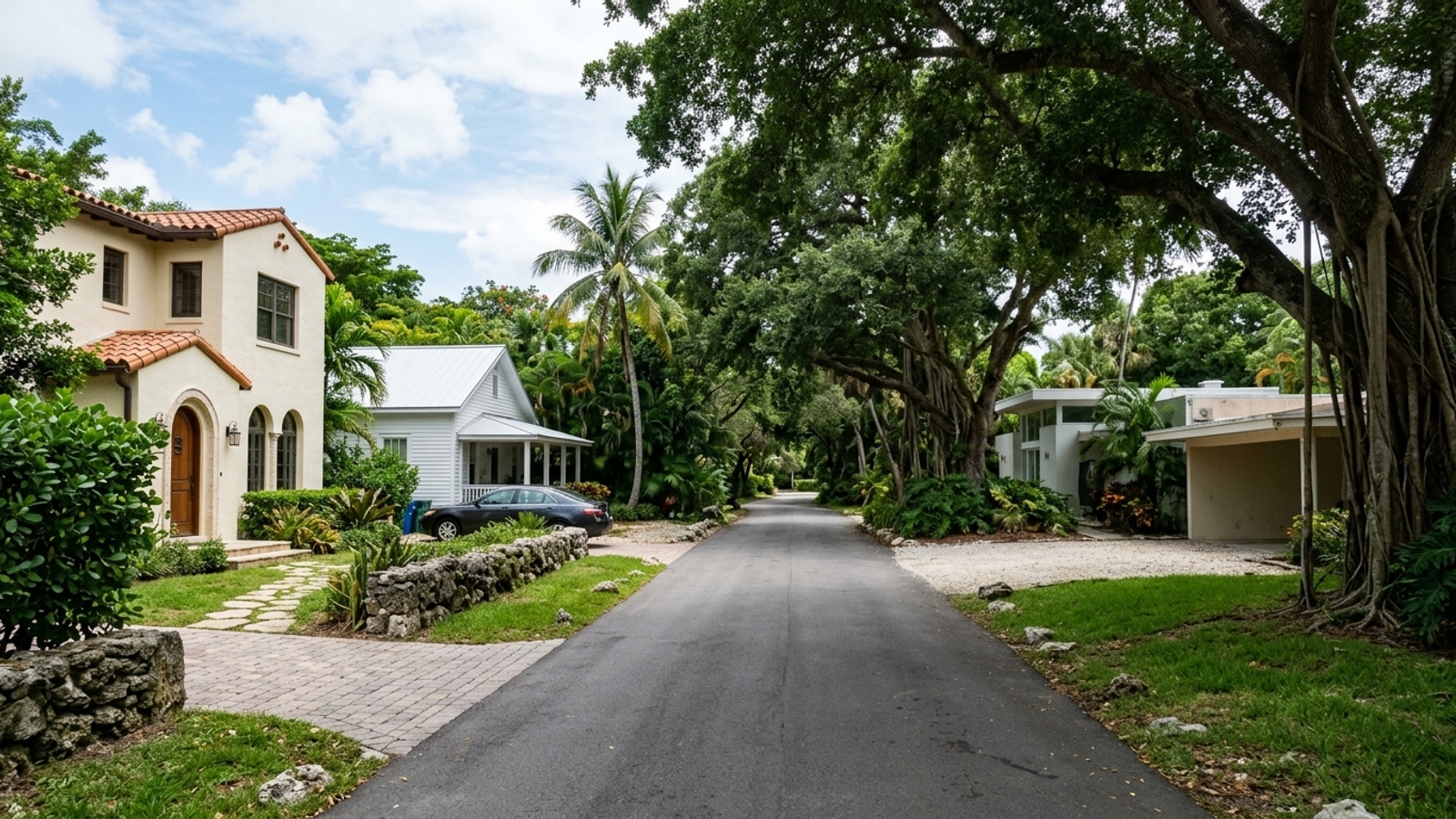
Buying a home in Coconut Grove, the bayfront Miami neighborhood in ZIP 33133 within Miami-Dade County, means a median of about $2.85 million for a single-family house or $1.5 million for a condo.
Key Takeaway
In Coconut Grove, your negotiating position depends on the property type: condos are a buyer’s market, houses are balanced, and townhomes favor sellers. The costs that surprise buyers come after the price:
- a property tax bill reset to full market value
- flood and wind insurance on bayside homes
- condo assessments driven by building reserve rules
Check all three during the inspection period, before your deposit is at risk.
Who This Guide Is For
This guide is for anyone buying a house, townhome or condo in Coconut Grove to live in, including relocating and first-time luxury buyers.
Coconut Grove Home Buying at a Glance
- Median sale prices: about $2.85M for houses, $1.5M for condos.
- Months of supply: houses 4.9, condos 8.3, townhomes 1.3.
- Miami-Dade custom: seller pays deed stamps, buyer pays owner’s title policy.
- Homestead exemption: file with the Property Appraiser by March 1.
- Resale condo: seven business days to review documents and cancel.
The Coconut Grove Real Estate Market Right Now
The MIAMI Association of Realtors reports at the county level. In August 2026, Miami-Dade single-family homes had a median closed price of $680,000, 4.9 months of supply, and medians of 40 days to contract and 80 days to sale. A separate data vendor put the City of Miami median at $595,000, with 84 average days on market, in October 2026.
Coconut Grove sits in a separate tier. August 2026 listing data put the median list price at $2.8 million, up 24% year over year. Realtor.com showed a median listing of about $2.5 million in March 2026. Figures differ by boundary and by list versus sale price, so judge any home against recent sales of its own property type.
Prices and Inventory Details
The house and condo medians cover the 12 months to October 1, 2026. The August listing data put prices at $1,178 per square foot, with listings recently selling after a median of 107 days. What the supply means for your offer:
- Condos (8.3 months, buyer’s market): There is room to negotiate price and ask for concessions.
- Houses (4.9 months, balanced): Offers near recent comparable sales are the norm.
- Townhomes (1.3 months, seller’s market): Expect competition and keep contingencies tight.
At the top end, the combined Coral Gables/Coconut Grove luxury condo submarket had about 10 months of inventory in Q3 2025. That was still the lowest among major Miami luxury submarkets.
Housing Types and Availability
The inventory spans early 20th-century houses, mid-rise and high-rise condo buildings, townhomes, and new construction. True entry-level houses are rare, and the premium gets steeper inside gated communities or on the bay.
If you plan to renovate or rebuild, check the rules first. Most of the neighborhood falls under the Coconut Grove Conservation District. This Miami 21 zoning overlay protects historic character, tree canopy and lot patterns, and the City’s Historic and Environmental Preservation Board handles review. Some properties also carry their own historic designations.
City Code Chapter 17 requires a permit to remove or relocate any tree, prune more than 25% of its canopy, or cut more than 10% of its roots. A buyer who pays a teardown price without checking can end up with a lot they cannot clear or expand as planned.
Coconut Grove Neighborhoods and Local Features
Coconut Grove is several distinct micro-markets layered on top of each other. Lot sizes, architectural styles and price points shift from one to the next.
Popular Enclaves
- North Grove: Larger lots and a short trip to Brickell and Downtown Miami.
- South Grove: Canopy-lined streets and historic homes.
- Center Grove (Grove Center): A walkable village near CocoWalk’s shops and restaurants.
- Southwest and Northeast Coconut Grove: Tracked as separate micro-markets with their own sales records.
- Gated communities: The Moorings, Hughes Cove, Entrada Estates and Bay Heights, if privacy is the priority.
Compare recent sales within the same micro-market before you make an offer.
Local Landmarks and Orientation
Vizcaya Museum and Gardens sits right on Biscayne Bay. It is an early 20th-century Italian Renaissance-style villa built for industrialist James Deering, with 50 acres of gardens.
The Barnacle Historic State Park holds Miami-Dade County’s oldest building still in its original location. The Coconut Grove Playhouse stands at the center of the neighborhood.
The Home-Buying Process in Coconut Grove
Cash offers are common at this price point, and any offer you submit needs a pre-approval letter or proof of funds attached. Pick an agent with recent closings in 33133 who can explain why prices differ between micro-markets, as the best real estate agent in Coconut Grove should.
Securing Financing and Making an Offer
For 2026, the conforming loan limit for a one-unit home in Miami-Dade County is $832,750, so almost any financed purchase here needs a jumbo loan. Jumbo lenders ask for heavier documentation, so start pre-approval early.
When you find a property, your agent drafts a contract covering the price, escrow deposit and contingencies. On the Florida Realtors/Florida Bar “AS IS” contract, the inspection period defaults to 15 calendar days after the Effective Date. The initial deposit is due within 3 days, unless other dates are filled in. The standard version of the form can default to 10 days. If you miss the inspection deadline without giving notice to cancel, backing out later can cost you the deposit.
Inspections and Closing
Hire licensed inspectors for the roof, foundation, plumbing and electrical systems, plus the pool or seawall where there is one. After inspections and any repair negotiations, the lender orders an appraisal. At these prices, an appraisal below the contract price leaves a gap you must cover in cash or renegotiate.
Financed purchases take at least a month from the Effective Date. The loan-approval period defaults to 30 days, and the lender cannot close until 3 business days after you receive the Closing Disclosure. Cash buyers can close once the inspection period ends and title work is done.
Closing day means a final walk-through, signing, and paying the remaining balance.
Closing Costs and Fees Buyers Pay
Who pays what follows Miami-Dade custom, not state law, and both points are negotiable in the contract:
- Deed documentary stamp tax: The seller customarily pays, at the county’s reduced rate of $0.60 per $100 of sale price for single-family homes.
- Owner’s title insurance: The buyer customarily pays and usually picks the closing agent, the reverse of most Florida counties.
- Mortgage taxes: Financed buyers also owe state taxes on the new mortgage, which rise with the loan amount.
- Buyer’s agent pay: Since August 17, 2024, you must sign a written agreement with an MLS agent before they tour a home with you. It states exactly how the agent is paid, whether a flat fee, hourly rate or percentage, and every term is negotiable. Open houses you attend on your own need no agreement.
Your title company’s closing estimate lists the remaining fees line by line.
What It Costs to Own in Coconut Grove
Taxes, insurance and association costs set the monthly figure, not the price alone.
Property Taxes and the Homestead Exemption
When a homesteaded house sells, Florida law has the Property Appraiser reassess it to full market value, so the seller’s capped bill is no guide to yours. Coconut Grove pays the City of Miami combined rate: 19.9878 mills for tax year 2025, covering city, county, school board and other levies. At that rate, a house at the neighborhood’s median price, assessed near that figure, owes roughly $57,000 a year before exemptions.
If the home is your primary residence, the homestead exemption takes up to $51,411 off the assessed value for 2026 (the school levy gets a smaller reduction). It also starts the Save Our Homes cap, which limits yearly assessment increases to 3% or the CPI change, whichever is lower.
File Form DR-501 with the Miami-Dade Property Appraiser by March 1 of the year after you buy. Late filing is allowed only for good cause, generally until about September 20. If you miss it, you pay that year’s full bill and start the cap a year later.
Flood and Windstorm Insurance
Bayfront blocks, especially along South Bayshore, are mapped in FEMA’s higher-risk AE and VE zones, while inland streets may fall in lower-risk X zones. The designation changes block by block, so check the exact address with Miami-Dade County’s flood-zone tool or FEMA’s Map Service Center. Federally backed lenders require flood insurance in any zone starting with A or V. Elsewhere it is optional but still advisable.
Ask your insurance agent which reports the insurer needs. Examples include a four-point inspection on an older home or a wind mitigation report on features that can lower the wind premium.
Under Florida Statutes §689.302, the seller must give you a written flood disclosure at or before signing the contract. Since October 1, 2025, it covers any flooding that damaged the home during the seller’s ownership. Get binding flood and wind quotes within the inspection period, because the premium can decide whether a bayside home fits your budget.
Buying a Condo or Townhome
Condos give buyers the most room to negotiate of any property type, but they also carry building risk. Condo buildings three or more habitable stories need a milestone inspection by an engineer or architect, then another every 10 years. The first is due by the end of the year the building turns 30, or 25 where the local authority requires.
Associations existing on or before July 1, 2022 must also complete a Structural Integrity Reserve Study. The deadline was December 31, 2025, or December 31, 2026 if done jointly with a milestone inspection. Underfunded reserves turn into special assessments that the new owner pays.
On a resale unit, the seller must give you the declaration, bylaws and rules, latest financial statement, budget, and FAQ sheet. You then have seven business days to cancel, a right that cannot be waived. Read the reserve study, budget and meeting minutes within that window.
Related guides: Selling a home in Coconut Grove Miami, Coconut Grove Miami, FL housing market, Coconut Grove Miami, FL ZIP codes, Pros and cons of living in Coconut Grove Miami, Best neighborhoods in Coconut Grove Miami.
Frequently Asked Questions
Is Coconut Grove a Good Place to Live?
The neighborhood offers a dense tree canopy, direct Biscayne Bay access and walkable village streets. Public school assignment follows Miami-Dade County Public Schools boundaries by address.
Is Coconut Grove Expensive?
Yes. House and condo medians sit far above the Miami-Dade county median, and property taxes and flood and wind insurance push the monthly cost higher still.
How Much Do Real Estate Agent Commissions Cost in Coconut Grove?
Commissions are negotiable and vary by brokerage. Your buyer’s agent fee is fixed in the written agreement you sign before touring homes.
How Long Does It Take to Buy a Home in Coconut Grove?
From contract to closing, a financed purchase takes at least a month. A cash purchase can close soon after the inspection period ends.
What Are the Most Common Pitfalls or Hidden Costs When Buying a Home in Coconut Grove?
Beyond the tax reset, insurance and condo assessments, a low appraisal can leave a cash gap. Conservation-district or tree-permit rules can also block renovation plans.
Can I Find a Home in Coconut Grove for Under $1 Million?
Options under $1 million are mostly condos, not houses. Before buying in that range, weigh the building’s reserves and association fees.
Can I Rent Out a Coconut Grove Home Short-Term?
Usually not for a house. Under Miami 21, single-family and duplex homes in the T3 and T4-R zones, which cover most residential Coconut Grove, are generally ineligible for short-term rental.
Where allowed, short-term rentals need a City of Miami Business Tax Receipt and zoning approval. Condo or HOA bylaws can restrict them further, so read the association’s rental rules before signing.
How Much Are Condo Association Fees in Coconut Grove?
Fees vary by building, so ask for the current budget for any unit you consider. The fee typically covers building insurance, common-area maintenance and reserve contributions, and the reserve-study rules can push it up.
Sources
- Bona Domus: Miami Real Estate Market (2026)
- Riley Smith Group: Coconut Grove Neighborhoods
- Visit Florida: Coconut Grove
- City of Miami: Coconut Grove NCD Draft (2018)
- CapCenter: Miami-Dade County Loan Limits (2026)
- Bayit Title: FAR/BAR Contract Guide
- Kelley Grant Law: Miami-Dade Closing Costs
- NAR: Settlement Resource for Homebuyers (August 2024)
- Miami-Dade Property Appraiser: 2026 Proposed Millage Rate Comparison
- Miami HAL: Homestead Exemption (2026)
- Miami-Dade County: Flood Zone Maps
- Florida Statutes §689.302: Flood Disclosure (2025)
- Florida DBPR: Condominium Inspections and Reserve Studies
- Florida Realtors: Florida Condominium Laws
- Coconut Grove Spotlight: Miami’s Short-Term Rental Rules (November 2024)



