

 Facebook
 X
 Pinterest
 Copy Link
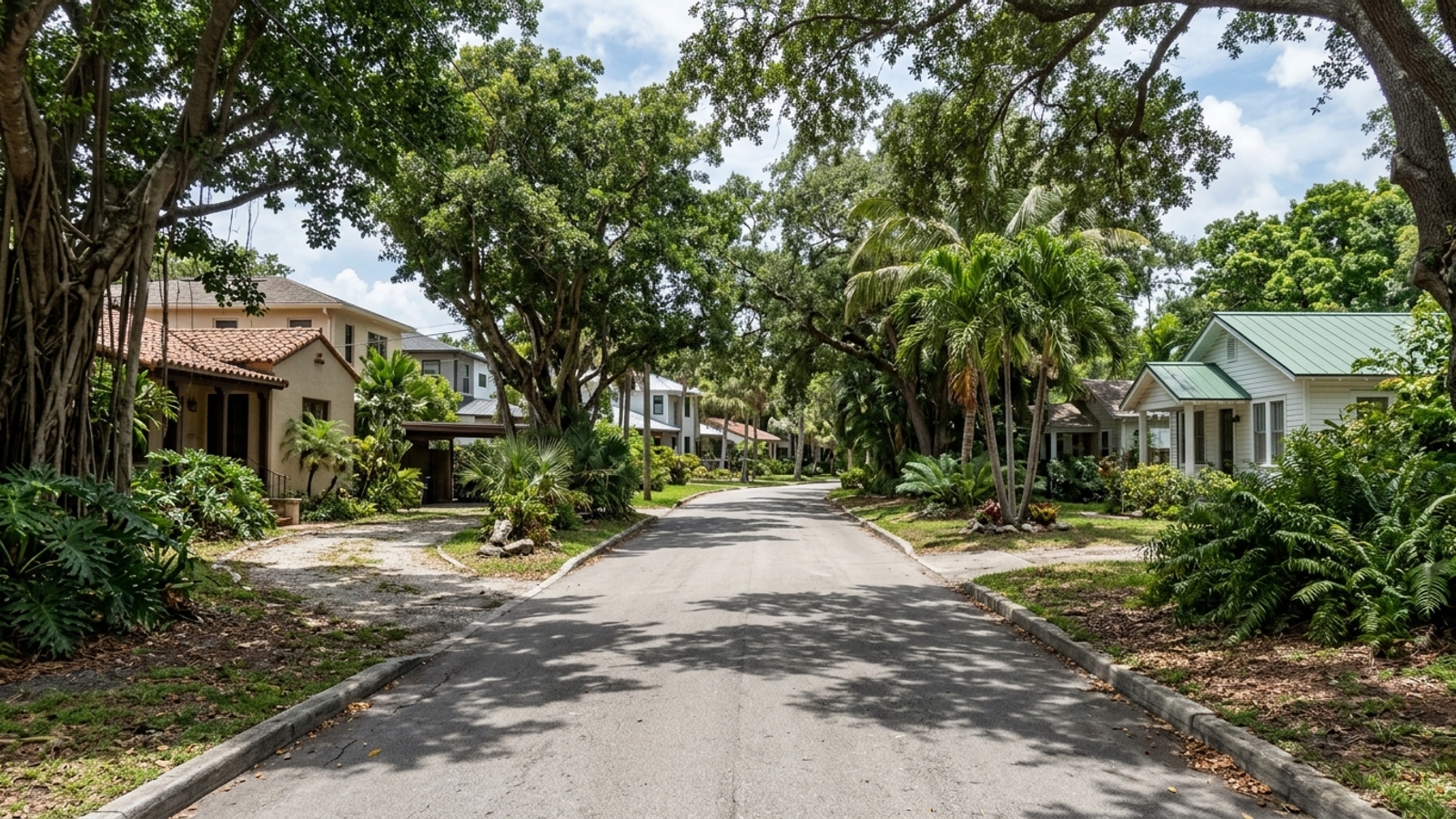
These two South Florida communities sit next to each other, but they’re structured differently. Coconut Grove is a neighborhood within the City of Miami. Coral Gables is its own independent city, with its own government, its own design board, and its own rules.
Key Takeaway
Coconut Grove is the stronger pick if you’re buying a condo. Grove condos had 18 months of supply in the 90 days ending Oct. 31, 2026, which gives you room to negotiate price and terms. If you’re buying a house, that advantage mostly disappears, so compare Grove single-family sales directly against Coral Gables single-family sales and factor in Coral Gables’ design review before you choose.
Who This Guide Is For
You’re deciding whether to buy in Coconut Grove or Coral Gables and want to know which side gives you better pricing and negotiating terms for the type of property you’re after.
How Coconut Grove and Coral Gables Compare
Coconut Grove is two markets under one name, so comparing it to Coral Gables on a single median misleads. Condos make up 3,224 of the Grove’s 4,288 listings, about three in four, so overall market figures mostly describe the condo market.
In the 90 days ending Oct. 31, 2026, Grove condos sat at 18 months of supply while Grove houses ran at 6.4 months. A house buyer reading the all-homes supply number would wrongly assume they have room to negotiate, so run any comparison with Coral Gables type by type. When comparing these property types, consider the pros and cons of living in Coconut Grove.
Portal area boundaries for Coconut Grove vary, so confirm the Coconut Grove zip code and boundaries before you pull comps.
Coconut Grove vs Coral Gables Home Prices by Property Type
Where you can negotiate depends on what you buy. In each market, days on market and the share of homes selling above asking show whether you can ask for closing-cost credits or need financing in place before you offer.
Condos
Only 1.1% of Coconut Grove condos sold above asking in the 90 days ending Oct. 31, 2026, and the median sale price was $534,855. You can open below list, ask for closing-cost credits, and take the time to inspect properly. Compare that median against current Coral Gables condo listings, since prices shift by building and amenities.
The catches come at resale, which may take longer, and from state building rules. Under Florida law, condominium buildings three or more habitable stories high must undergo a milestone inspection by Dec. 31 of the year they reach 30 years of age. The local agency can require it at 25 years if local conditions, such as proximity to salt water, call for it. Associations for those buildings must also complete a Structural Integrity Reserve Study. One with a milestone inspection due by Dec. 31, 2026 may complete the study at the same time.
In older bayfront towers, those requirements can translate into special assessments or higher monthly dues. Before you make an offer, ask the association for the most recent milestone inspection report, reserve study, and current monthly dues.
Single-Family Homes
Negotiating room thins out considerably here. The median Coconut Grove single-family home sold for $822,581, and 9.8% of houses sold above asking in the 90 days ending Oct. 31, 2026. That’s roughly nine times the condo rate, and Grove houses sold in about half the time Grove condos did.
Well-priced houses draw competing offers, so come with financing in place and don’t expect much off the list price. Coral Gables single-family inventory tends to be similarly tight. You’re choosing between two competitive markets, not moving from competition into cushion.
The constraints here are physical as much as financial. Many Grove lots sit under mature tree canopy or near the bay, so City of Miami tree removal permits and flood insurance costs can limit what you’re able to build or change. Look up the property’s FEMA flood zone, ask the seller for the elevation certificate, and get flood and wind insurance quotes before you go under contract.
Townhouses
The Grove’s median townhouse sold for $1,132,430, more than the median single-family home. The reason is the product: newer attached construction that offers buyers a smaller lot without the governance structure of a condo tower. Compare active Coral Gables townhouse listings to see where pricing lands, since available inventory fluctuates.
Townhouses sold fastest of the Grove’s property types, at a median 61 days on market, but the pool is small. That median price rests on just 42 sales, so a few large closings can move it, and your choices at any given moment are limited. Ask any townhouse HOA for current dues, what they cover, and whether any special assessments are planned.
City of Miami vs City of Coral Gables: Zoning and Renovation Rules
Coral Gables’ Board of Architects reviews exterior changes: awnings, driveways, fences, paint, signs, windows, and new construction. The street stays consistent, but your own project faces review time and design limits.
Coconut Grove follows City of Miami zoning under Miami 21, plus the Coconut Grove Neighborhood Conservation District (NCD-3) rules. NCD-3 protects the area’s landscaped character with specific limits on setbacks, minimum lot sizes, and the tree canopy.
The two cities also set different millage rates, so the same assessed value can carry a different tax bill depending on which side of the border you buy on. Use the Miami-Dade Property Appraiser’s tax estimator for the specific address. Ask that city’s planning department which permits your renovation plans would need.
Living in Coconut Grove vs Coral Gables: Pros and Cons
Coconut Grove fronts Biscayne Bay, with access to Dinner Key marina, Peacock Park, and CocoWalk. Miami-Dade Transit’s Metrorail serves the area, with stations including Vizcaya and Coconut Grove. The tradeoff: bayfront exposure brings the flood and insurance costs covered above, and the village center draws weekend crowds.
Coral Gables centers on Miracle Mile, the Venetian Pool, the Biltmore Hotel, and the University of Miami, with streets built around a planned Mediterranean Revival aesthetic. What you give up is exterior freedom. The city’s design control applies to your house as well as your neighbors’.
Both areas are served by Miami-Dade County Public Schools. Boundaries change, so confirm the school assignment for a specific address through the district’s school locator.
How to Choose Between Coconut Grove and Coral Gables
- Are you buying a condo or a house? If a condo, start with the Condos section, where the Grove’s oversupply works in your favor. If a house, go to Single-Family Homes, where competition is tighter on both sides.
- Do you plan to change the exterior, add on, or rebuild? Read the zoning and renovation rules section first. The two sides impose different constraints on what’s possible.
- Do you want to be near Biscayne Bay and its marinas, or near Miracle Mile and the University of Miami? That preference points you to one side in the Living section.
- How soon might you need to sell? If it’s within a few years, weigh the resale-time catches in the Condos and Townhouses sections.
If you’re buying a condo and can hold it, the Grove’s condo oversupply gives you the most room on price and terms. If you’re buying a house, both sides are competitive. Let your renovation plans and location decide: Coral Gables if you want predictable streets, the Grove if you’d rather avoid Board of Architects review.
A buyer’s agent who works both sides of the border can compare current listings type by type for you.
At a Glance
- All homes, Coconut Grove: median sale price $664,538, up 3.8% year over year, 975 homes sold (90 days ending 2026-10-31)
- All homes, Coconut Grove: 13.5 months of supply, 4,288 homes for sale, median $539 per sq ft, 4.7% sold above list (90 days ending 2026-10-31)
- Condos, Coconut Grove: median sale price $534,855, down 1.5% year over year, 550 sold, median 143 days on market, 94.5% sale-to-list (90 days ending 2026-10-31)
- Condos, Coconut Grove: 18 months of supply, 3,224 for sale, median $566 per sq ft (90 days ending 2026-10-31)
- Single-family homes, Coconut Grove: median sale price $822,581, up 3.5% year over year, 303 sold, median 74 days on market, 94.9% sale-to-list (90 days ending 2026-10-31)
- Single-family homes, Coconut Grove: 6.4 months of supply, 629 for sale, median $556 per sq ft (90 days ending 2026-10-31)
- Townhouses, Coconut Grove: median sale price $1,132,430, down 0.5% year over year, based on 42 sales, median 61 days on market, 95.4% sale-to-list, 9.9% sold above list (90 days ending 2026-10-31)
- Townhouses, Coconut Grove: 8.3 months of supply, 112 for sale, median $597 per sq ft (90 days ending 2026-10-31)
Coconut Grove vs Coral Gables FAQs
Is Coconut Grove More Expensive Than Coral Gables?
The Coconut Grove all-homes median sale price was $664,538 in the 90 days ending Oct. 31, 2026. Whether that’s more or less than Coral Gables depends on property type, so compare condo and single-family sales separately.
Is Coconut Grove Miami on the Beach?
No. The Grove sits on the Biscayne Bay shoreline with marinas and bayfront parks but no ocean beach. The nearest ocean beaches are at Crandon Park in Key Biscayne and Miami Beach, both a drive across the water.
How Far Is Coral Gables From Coconut Grove?
They border each other. Drive times between their main commercial streets, CocoWalk and Miracle Mile, vary with traffic.
Is Coral Gables Considered Miami?
No. Coral Gables is an independent city in Miami-Dade County, incorporated on April 29, 1925, while Coconut Grove was annexed into the City of Miami in 1925.
Why Is Coral Gables Famous?
Coral Gables is a 1920s planned city developed by George Merrick. It is known for its Mediterranean Revival architecture and landmarks such as the Venetian Pool and the Biltmore Hotel.
Is Coconut Grove in Miami-Dade County?
Yes. It’s a City of Miami neighborhood in Miami-Dade County, mostly within the 33133 zip code.
Does Coconut Grove Flood More Than Coral Gables?
Flood risk is set lot by lot by FEMA flood zones, not by neighborhood. Coconut Grove’s bayfront blocks fall into high-risk AE and VE zones, which require flood insurance for federally backed mortgages. Check the specific address on the county’s flood zone map.



