

 Facebook
 X
 Pinterest
 Copy Link
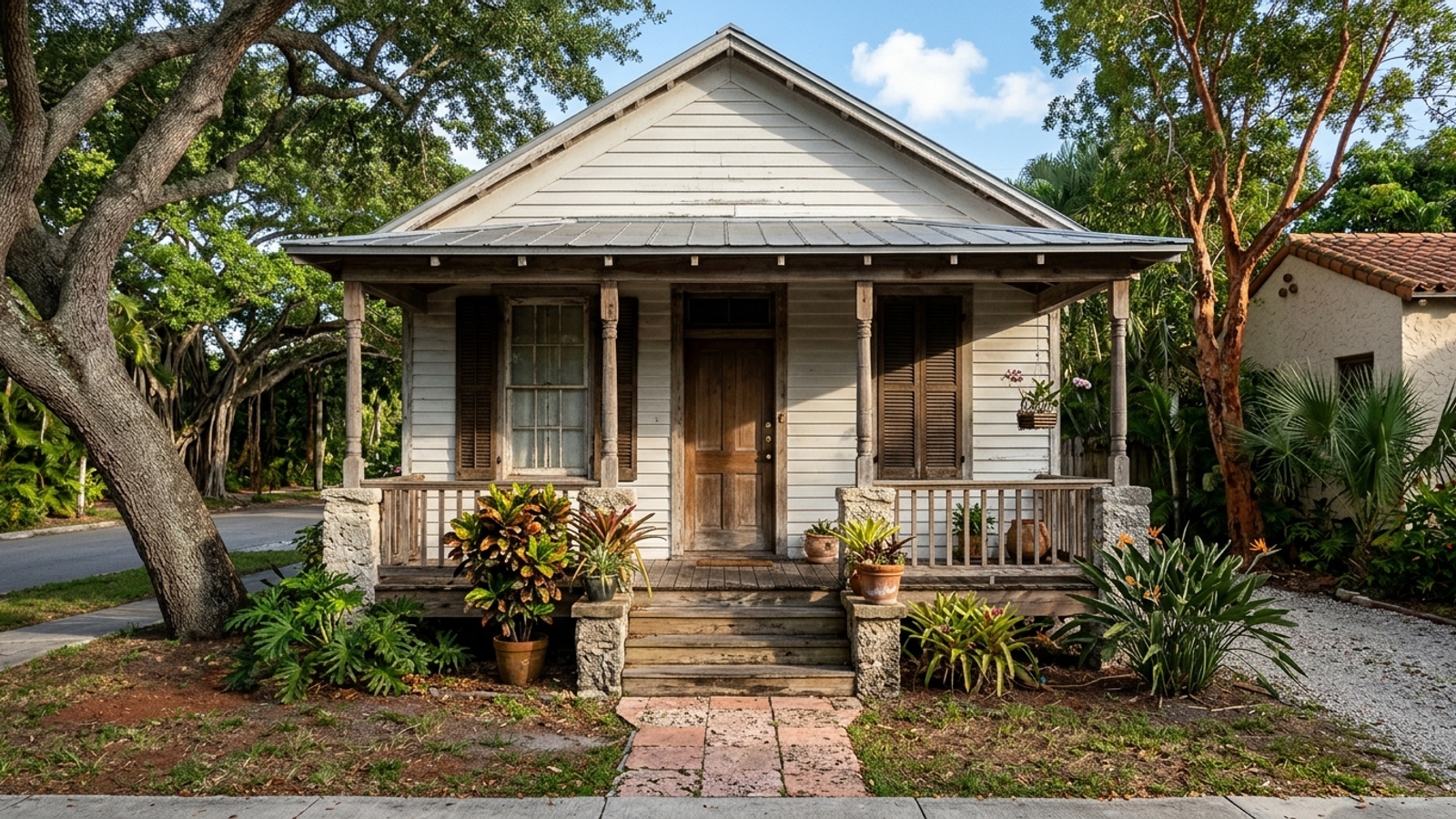
Coconut Grove sits on the mainland shore of Biscayne Bay, directly south of Brickell and next to Coral Gables inside the City of Miami.
Key Takeaway
Coconut Grove was named in 1873, settled around the 1882 Peacock Inn by homesteaders and Bahamian workers, and annexed by Miami in 1925. The Barnacle, Vizcaya, and Charles Avenue are the clearest places to see that past. If you want to own part of the original village, look at single-family homes and expect less room to bargain. If you want room to negotiate, the newer condo layer had 18 months of supply in the 90 days ending October 31, 2026.
Who This Guide Is For
You’re curious how Coconut Grove became what it is today, or you’re weighing whether to buy into its older village streets or its newer bayfront condos.
How Local History Shapes the Coconut Grove Market
Coconut Grove’s history is a long argument over keeping a low-rise village of houses on tree-shaded lots, and the market still prices that argument in. The newer tower layer that grew up beside the original village is where today’s supply concentrates.
The two layers move at different speeds. The type of property you target decides how fast you need to act and which checks you’ll need. The pros and cons of living in Coconut Grove, FL can help clarify these property choices.
Where the Neighborhood Sits on Biscayne Bay
The bay drew settlers looking for waterfront access and a mild climate. The tradeoff is that it’s on the bay, not the ocean, so reaching an Atlantic beach means driving to Key Biscayne or Miami Beach.
Older Houses vs. Newer Condos
In the 90 days ending October 31, 2026, single-family homes sold in a median 74 days and condos in a median 143. Condos cost slightly more per square foot, $566 versus $556 for houses, yet the older single-family layer sells in roughly half the time. If you’re house-hunting, be ready to move. If you’re condo-shopping, you have time and room to negotiate.
How Coconut Grove Got Its Name
The 1873 Post Office
In 1873, Dr. Horace Porter opened the first post office in the area and named it “Cocoanut Grove,” using an archaic spelling of the fruit. The name came from the coconut palms growing near the bay. It predates the City of Miami by more than two decades.
The Spelling Change to Coconut
The spelling changed to “Coconut Grove” when the community incorporated as its own town. Horticulturalist Dr. David Fairchild had told the incorporators this was the proper spelling. Older plats, deeds, and maps may still carry “Cocoanut,” so search county records under both spellings.
A Timeline of the Village
Before Settlement: The Tequesta
The Tequesta people lived along Biscayne Bay long before settlement. Little of their presence is visible in the neighborhood itself, and HistoryMiami Museum holds most of the record.
1882: The Peacock Inn Opens
Charles and Isabella Peacock, encouraged by Ralph Munroe, opened the Bay View House in 1882, later renamed the Peacock Inn. It was the first hotel on mainland Florida south of Palm Beach, and the village grew around it. Nothing of the inn survives; its site is now Peacock Park.
1880s to 1890s: Bahamians Build the Village
Bahamians came to staff the inn and build the village, forming their own settlement along what became Charles Avenue. They brought building skills suited to the climate. Much of the earliest housing is gone. What survives is protected by designation, which matters directly if you buy there.
1891: The Housekeepers Club
Women of the settlement formed the Housekeepers Club in 1891. It later became the Woman’s Club of Coconut Grove and was one of the area’s first civic groups. It’s a private club building, so check visitor rules before going.
1919: Incorporation as a Town
Coconut Grove incorporated as its own town in 1919, taking its modern spelling. Independence lasted only about six years.
1925: Annexation by Miami
In 1925, despite strong opposition from residents, the Grove was annexed into the City of Miami along with most of the town of Silver Bluff. There’s no separate Grove government. City of Miami permits, preservation board, and zoning rules apply to every property.
1926: The Great Miami Hurricane
The 1926 hurricane struck the bayfront and helped end the land boom. That storm history is why flood checks matter on any property near the water.
1960s to 1970s: The Bohemian Era
In the 1960s and 1970s, the Grove became a nationally known bohemian enclave of folk musicians, artists, and coffeehouses. Few of that era’s venues survive, and its legacy lives mostly in the arts festival.
1980s to 1990s: Towers and Shopping Centers
Bayfront high-rises and shopping centers reshaped the village center, including Mayfair, launched in 1979, and CocoWalk, opened in 1990. Their towers are the condo layer buyers shop today.
1992: Hurricane Andrew
Hurricane Andrew damaged the Grove’s bayfront and tree canopy in 1992. Homes built before later building-code updates may lack wind upgrades, and that shows up in insurance quotes.
2000s to Today: Redevelopment and Preservation Rules
New construction continues alongside conservation-district and designation rules meant to hold the village scale. Active redevelopment can mean construction near a home you’re considering, so check the City of Miami’s pending projects for the block before you get attached to a listing.
Historic Landmarks to Visit
The Barnacle Historic State Park
Built in 1891, the Barnacle is the oldest house in Miami-Dade County still standing on its original site. Ralph Munroe built it for the climate and kept it on its bayfront lot. Florida State Parks sets hours, house tours, and entry fees, so check current rules before going.
Biscayne Bay Yacht Club
Munroe founded this club in 1887, and it is central to the Grove’s sailing identity. It’s a private club, not open to the public.
Vizcaya Museum and Gardens
Vizcaya was built as James Deering’s winter estate. Construction began in 1912, and the villa was built primarily between 1914 and 1922. It is now a museum and National Historic Landmark. Adult admission was $25 for 2025, and advance tickets may be required.
The Kampong
Botanist David Fairchild’s home and garden is now part of the National Tropical Botanical Garden, linking the neighborhood to the plants that shaped South Florida. It opens only on set days, so check before going.
Dinner Key and Miami City Hall
Pan American Airways flew seaplanes from Dinner Key in the 1930s. The last flight left in 1945, and the terminal building became Miami City Hall in 1954. It’s a working government building, so interior access is limited.
Coconut Grove Playhouse
The Playhouse opened in 1927 as a silent movie theater and hosted the American premiere of Samuel Beckett’s “Waiting for Godot” in 1956. It has been closed since 2006. A restoration under way in late 2025 was demolishing roughly 80% of the structure, so it is not open to visitors.
What the Area Is Known For Today
Sailing on Biscayne Bay
Today’s marinas and regattas trace back to Munroe and the yacht club, and the tourism board calls the area Miami’s sailing capital. Slip availability and waitlists at Dinner Key Marina change, so ask the City of Miami for current availability.
The Coconut Grove Arts Festival
The festival began in 1963 during the bohemian era and remains one of the area’s biggest annual events. Festival weekends bring road closures and heavy traffic, so check the dates if you’re touring homes or planning a move.
The Tree Canopy
Shaded streets of banyans, oaks, and palms are the neighborhood’s visual signature, and the conservation-district rules exist partly to protect them. That protection cuts both ways: removing or trimming major trees on your own lot can require a permit.
Historic Streets and Residential Rules
On these blocks, history sits on private property. Specific streets and building materials carry City of Miami preservation and conservation rules that bind whoever owns them.
Charles Avenue
The Bahamian settlement centered here, and the street’s historic designation and the Coconut Grove Cemetery record that past. Designated status can mean preservation-board review before exterior changes on affected properties, so confirm what that review covers before you commit.
Mariah Brown House
This late-1800s house is tied to one of the early Bahamian settlers and is preserved as a historic site. Public access isn’t guaranteed, so check before visiting.
Coral Rock Houses
Many early homes and walls use local oolitic limestone, known as coral rock, which gives the older streets their look. Repairs to old masonry need experienced trades, so ask your inspector whether they’ve worked on coral-rock homes specifically.
Individually Designated Homes
Some houses carry individual designations rather than sitting within a historic district. Designation follows the property, not the owner, and it can come with approval steps for exterior work. Confirm status before you make an offer, not after.
The Neighborhood Conservation District
Under Miami 21’s Appendix A, the Coconut Grove Neighborhood Conservation District NCD-3 aims to preserve the landscaped character and protect the tree canopy. All demolition permits require a Waiver and must be referred to the Planning Department for review under the Tree Preservation Ordinance, and all submittals must include a tree survey by a certified arborist. These rules also limit how large a new house or addition can be on an older lot, which shapes what a lot is worth to you.
Property Types and Market Realities
Buying a home in Coconut Grove means matching your timeline to the property type: houses reward fast, financed offers, while condos leave time for document review.
Historic Single-Family Homes
This is the layer the history protected. Single-family homes sold for a median $822,581 in the 90 days ending October 31, 2026, up 3.5% year over year. With 9.8% selling above list, expect competition and come with financing ready.
The figures cover the whole Coconut Grove data area, newer houses included. A truly old house can carry designation, masonry, and insurance costs the median doesn’t reflect, so confirm age and designation property by property.
New Construction on Older Lots
Some buyers want the old village location with a new house. Teardowns run directly into designation review, conservation-district limits, and tree permits. A designated house may not be freely demolished, and canopy trees may limit where you can build. Confirm both before pricing a lot as a teardown.
Bayfront Condos
This is the newer tower layer, where you have room to negotiate. The condo median sale price dipped 1.5% year over year, and only 1.1% of condos sold above list, with a 94.5% sale-to-list ratio. Offers below list are normal here.
What you give up is control over shared expenses, because association costs and building condition decide the real price. Ask the association for current dues, its latest milestone inspection, and its reserve study before you offer.
Townhouses
Townhouses offer newer construction on a smaller footprint and are the quickest type to sell, at a median 61 days and a median price of $1,132,430. They also carry the highest price per square foot of any type, $597. With only 42 sales underlying the figures, a single listing can move them.
How to Check an Older Home Before Buying
Confirm the Designation Status
Check the City of Miami’s historic preservation records to see whether the house or street is designated and what a certificate of appropriateness covers. Approval adds time to any exterior renovation plan, so build that into your timeline from the start.
Pull the Permit History
Request the City of Miami building permit history and compare finished additions, enclosed porches, and roof work against what was permitted. Unpermitted work on an older house may need to be legalized after closing, at the buyer’s cost.
Check the Flood Zone and Elevation Certificate
Look up the address on the FEMA flood map and ask the seller for an elevation certificate, since bayfront and low-lying streets differ block by block. The flood zone can drive insurance and lender requirements, so learn it before you offer, not under an inspection deadline.
Get Insurance Quotes Early
Older roofs and openings affect premiums, so request quotes and a wind-mitigation report during your inspection window. A house that fits the budget on price can stop fitting it once insurance is quoted.
Deciding Where to Look
Do You Want a House From the Original Village?
If so, go to Historic Streets and Residential Rules, Historic Single-Family Homes, and the check steps. This path offers the least negotiating room and the most approval steps.
Do You Want Room to Negotiate?
If so, go to Older Houses vs. Newer Condos and Bayfront Condos. The negotiating power comes with association dues and building-condition questions you’ll need to answer first.
Are You Ready for Renovation Approvals?
If you plan exterior changes or a rebuild, go to Confirm the Designation Status, The Neighborhood Conservation District, and New Construction on Older Lots. If you need to renovate fast, a designated house may be the wrong fit, however good the story.
Can You Live With Flood and Insurance Costs?
Go to the flood and insurance steps and the flooding FAQ. On the bay, the view and the flood exposure tend to come as a package.
At a Glance
- All homes, 90 days ending Oct. 31, 2026: median sale price $664,538 (up 3.8% year over year); 975 sold; median 109 days on market; 94.6% sale-to-list; 13.5 months of supply; 4,288 listed
- Single-family homes, 90 days ending Oct. 31, 2026: median sale price $822,581 (up 3.5%); 303 sold; median 74 days on market; 94.9% sale-to-list; 9.8% sold above list; 6.4 months of supply; $556 per sq ft
- Condos, 90 days ending Oct. 31, 2026: median sale price $534,855 (down 1.5%); 550 sold; median 143 days on market; 94.5% sale-to-list; 1.1% sold above list; 18 months of supply; 3,224 listed; $566 per sq ft
- Townhouses, 90 days ending Oct. 31, 2026 (42 sales): median sale price $1,132,430 (down 0.5%); median 61 days on market; 95.4% sale-to-list; 9.9% sold above list; 8.3 months of supply; $597 per sq ft
Coconut Grove History FAQs
Is Coconut Grove in Miami Beach or on the Beach?
No to both. It’s on the bay inside the City of Miami, with bayfront parks and marinas but no ocean beach. Key Biscayne is about 12 minutes away by car, and Miami Beach is roughly 20 to 25 minutes by rideshare.
Is Coconut Grove the Oldest Neighborhood in Miami?
It depends on how the claim is framed. The area was named in 1873, before the City of Miami incorporated in 1896, but it became part of Miami only through the 1925 annexation.
What County Is Coconut Grove In?
It’s in Miami-Dade County. County records, the property appraiser, and county services apply alongside City of Miami rules.
What ZIP Code Is Coconut Grove?
The primary ZIP code is 33133. Confirm a specific address’s ZIP code and neighborhood boundary with USPS.
How Far Is Coconut Grove From Downtown Miami?
It’s roughly 6.7 to 7 miles from Downtown Miami, about an 11-minute drive.
Does Coconut Grove Flood?
Yes, parts of it do. Bayfront and low-lying streets sit in FEMA special flood hazard areas, so run the flood-zone check above on any address you consider.
Can You Cut Down a Tree on Your Property in Coconut Grove?
It depends on the tree and the location, and the conservation district’s tree rules apply. Confirm with the City of Miami before any removal or major trimming.
How Much Does a Home in Coconut Grove Cost?
The median sale price for all homes was $664,538 in the 90 days ending October 31, 2026. The At a Glance list gives medians by property type.



