

 Facebook
 X
 Pinterest
 Copy Link
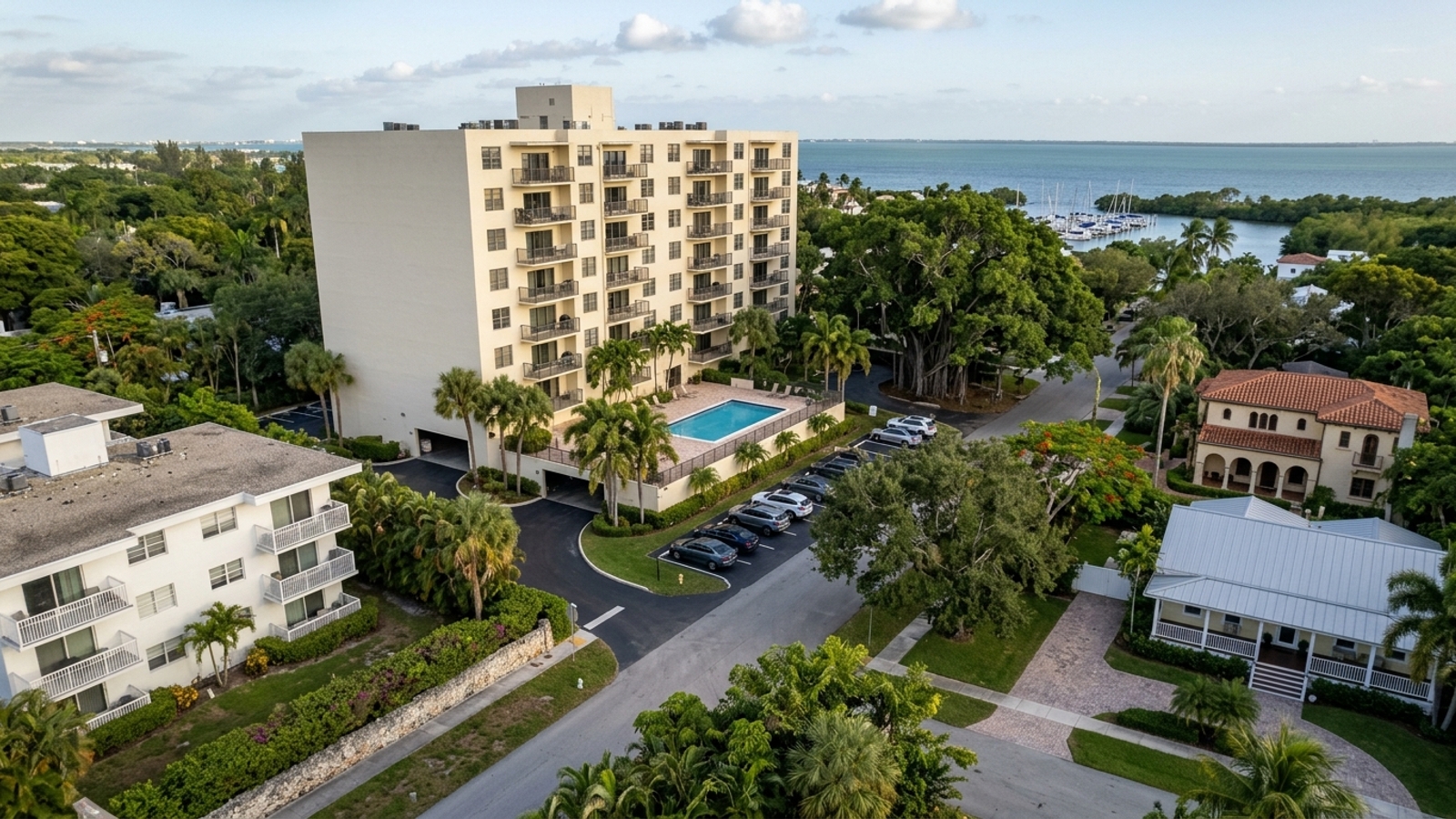
Retiring in Coconut Grove, the “retirement community” is a condo building you buy into, not a 55+ campus. And right now, condos are where buyers hold the most room to negotiate. They sit on the market for a median of 143 days, compared to just 74 days for houses, and only 1.1% sell above list price.
Condos still cost more per square foot than houses, so the play is to negotiate hard on price, then put the savings toward vetting the building’s reserves, assessments, and age rules. That sequence matters more here than in most markets.
Key Takeaway
If you’re retiring in Coconut Grove, start with a condo you buy rather than waiting on a dedicated 55+ campus. Condos are the lowest-priced way in and the market where you have the most negotiating room, with 18 months of supply currently available. If you want more space per dollar and a quicker resale, look at single-family homes instead. If you need daily care, search the state’s licensed assisted living directory for the 33133 area.
Who This Guide Is For
You’re planning where to live in retirement in Coconut Grove and deciding between a managed senior community and a condo or house you buy and age in.
What Retirement Housing Is Available in Coconut Grove?
Florida used to require 55+ communities to register with the state. That’s no longer the case for individual communities, which means you can’t pull a tidy list and start touring. You have to verify a building’s status directly rather than taking a listing’s word for it. Weighing the pros and cons of living in Coconut Grove can help you decide if the neighborhood matches your retirement goals.
Retirement living here falls into three paths: age-restricted buildings, licensed care facilities, and standard properties you buy to age in place. Each carries different costs and rules.
55+ Communities in Coconut Grove
Under the federal Housing for Older Persons Act, a community can be legally 55+ if it meets specific age and occupancy rules. Florida used to require these communities to register with the Florida Commission on Human Relations, but that requirement ended in 2020. No zip-specific registration list exists for the 33133 area.
If you want an age-restricted building, you’ll need to check the association’s own governing documents. Worth knowing before you fall in love with a unit: age-restricted buildings shrink your pool of buyers and renters when you sell or lease. Confirm the rules before you count on renting the unit out later.
Independent and Assisted Living Near Coconut Grove
Licensed assisted living facilities can be searched by zip code on the state’s FloridaHealthFinder site, which also includes inspection reports for every licensed facility in the area. Independent living is generally not licensed care, so it doesn’t appear in the same state database.
If you need daily care support on site, start with the state’s licensed assisted living search for zip 33133. The catch: monthly fees can climb as care needs grow, and you build no equity. Ask each facility in writing how and when rates rise.
Buying a Condo or House to Age In Place
Buyers retiring in the neighborhood who choose a standard property arrange their own home care as needed. You pick your own building or street and keep the equity.
What you give up is a built-in support system. No one manages the building or your care for you, so accessibility, repairs, and future help are your job to plan.
Condo vs. House for Retirement in Coconut Grove
Condos and single-family homes are running on very different tracks right now. Condos sit longer and give buyers room to negotiate. Houses move faster and offer more space per dollar but put all the maintenance on you. Which one fits depends on your tolerance for exterior upkeep and how much interior square footage you need.
Condos in Coconut Grove
If you want the most negotiating room and no exterior upkeep, condos are your starting point. Barely one in a hundred sold above asking price in the last 90 days. On a condo listed at $600,000, the typical 94.5% sale-to-list ratio puts a close near $567,000, about $33,000 under asking.
Bidding wars are rare here. The catch is that a lower purchase price doesn’t guarantee lower holding costs. Florida’s condo safety laws can bring higher dues and special assessments, so the savings you negotiate may need to go right back into the building.
Single-Family Homes in Coconut Grove
If space per dollar is the priority, single-family homes are worth a close look. The median price per square foot for a house is $556, which comes in below the condo figure, so you’re paying less per square foot on the house side.
The entry price is higher, with a median sale price of $822,581, but you avoid the per-square-foot premium that condos carry. Resale is also faster, at a median of 74 days on market. The trade-off: you take on the roof, yard, exterior repairs, storm prep, and your own insurance. If a split-level or stair-heavy layout won’t work for you in later years, check for a ground-floor bedroom before you get attached to a floor plan.
Townhouses in Coconut Grove
Townhouses are often treated as a budget middle ground. In this neighborhood, they’re not. Based on 42 recent sales, the median sale price for a townhouse is $1,132,430, the highest of any home type here.
That figure rests on a small sample of 42 sales, so it can swing from quarter to quarter. Many townhouses also spread living space across more than one floor, which matters for aging in place. Confirm where the primary bedroom and bathroom sit before you commit.
What to Check Before Buying a Condo for Retirement
Florida condo associations generally can no longer vote to skip funding reserves for key structural items. That changes the financial reality of buying into an older building, particularly in a neighborhood where many buildings have been here for decades.
The savings you negotiate on purchase price may need to cover future repairs. Getting clear on what to ask for before you’re under contract is the difference between a good deal and an expensive surprise.
Milestone Inspection and Reserve Study
Florida’s SB 4-D mandates structural milestone inspections for condominium and cooperative buildings that are three or more stories tall. The law also requires condo associations to complete a structural integrity reserve study, performed or verified by a licensed engineer, architect, or certified reserve specialist.
Request both documents before you make an offer, not after. A thin reserve fund today almost always means higher dues or a special assessment for whoever owns the unit next. That could be you.
HOA Dues and Special Assessments
Ask the HOA for current monthly dues, what they cover, and any approved or proposed special assessments. Then read the last 12 months of board minutes to see what repairs the association is actively debating.
You can use the current condo market’s favorable conditions to ask the seller to credit or pay a known assessment. Dues can be raised after you close, and a fixed retirement income has to absorb increases you don’t control.
Age Restrictions and Rental Rules
Confirm whether the building is age-restricted and check its registration with the Florida Commission on Human Relations. Read the association’s leasing rules carefully: minimum lease term, rental caps, and waiting periods all affect your exit options.
Strict rental limits can make the unit harder to sell or rent if you move to assisted living later. Find that out before you’re under contract.
Elevators and Unit Layout
Ask how many elevators the building has and what the protocol is during outages or after storms. Look for step-free entry from parking, check door widths, and ask whether a walk-in shower exists or can be permitted.
A single-elevator building can leave upper floors effectively unreachable during repairs. Ask the association what happened during the last outage. Mitzi Mitchell, a condominium association director, can help you read a building’s reserve study and meeting minutes before you make an offer.
Costs and Services to Plan For in Retirement
Eligible Miami-Dade residents 65 and older can ride county buses and Metrorail free with a Golden Passport. That’s worth factoring into your budget alongside taxes, insurance, and how close a given building sits to transit.
Fixed incomes need predictable expenses. Association dues and insurance premiums can both rise, so county exemptions and transit perks help stabilize what you’re spending month to month.
Property Taxes and Senior Exemptions
Florida caps annual increases in the assessed value of a homesteaded primary residence. Buying resets the assessment, so the seller’s tax bill is not your tax bill.
Miami-Dade offers an additional exemption for qualifying owners 65 and older, with an income limit attached. Contact the Property Appraiser to apply. It’s not automatic, and dues and insurance are not capped, so plan accordingly.
Homeowners and Condo Insurance
Look up the address on FEMA’s flood map and get insurance quotes before signing a contract. If you’re buying a condo, ask what the association’s master policy covers, because the gap between that and your individual policy is your responsibility.
Premiums can change at every renewal. Budget for increases rather than assuming today’s quote holds.
Hospitals and Transit Near Coconut Grove
HCA Florida Mercy Hospital is a 488-bed acute care hospital in the neighborhood at 3663 S Miami Ave. For transit, the Coconut Grove Metrorail station on the Green and Orange lines is at 2780 SW 27th Avenue, with the Douglas Road station just southwest.
The Golden Passport lowers the cost of living without a car, but the rail stations sit on the neighborhood’s western edge along US-1. From many bayside condos, you’ll still need a ride or a long walk to reach them. Check the distance from any building you’re seriously considering.
How to Narrow Your Retirement Housing Options
Deciding where to land comes down to your timeline for care, your budget for assessments, and how much space you need. If you’re selling a current home to fund the move, run the property tax implications early in the process.
- Do you need help with daily care now or within a few years? If yes, start with the state’s licensed assisted living directory. If not, focus on standard condos and houses.
- Is an age-restricted building a must-have? If yes, look for communities that meet the federal guidelines and verify their rules before you tour.
- Which matters more: single-level living with no exterior upkeep, or space for the money? For no upkeep, focus on condos. For space, look at single-family homes, where houses cost less per square foot.
- Could your budget absorb a special assessment in the first few years? If not, review the milestone inspection and reserve study before you make an offer.
Mitzi Mitchell, who works in English and Spanish, can pull current condo sales and association documents for buildings on your shortlist. Compare the local cost of living and lifestyle trade-offs, or review a neighborhood-by-neighborhood comparison to see which streets fit your routine.
Coconut Grove Housing Market at a Glance
- All homes: median sale price $664,538, up 3.8% year over year; 109 median days on market; 13.5 months of supply (975 sales, 90 days ending Oct. 31, 2026)
- Condos: median sale price $534,855, down 1.5% year over year (550 sales, 90 days ending Oct. 31, 2026)
- Condos: 143 median days on market; 94.5% sale-to-list; 1.1% sold above list (90 days ending Oct. 31, 2026)
- Condos: 18 months of supply; 3,224 listings in inventory (90 days ending Oct. 31, 2026)
- Condos: median $566 per square foot (90 days ending Oct. 31, 2026)
- Single-family homes: median sale price $822,581, up 3.5% year over year (303 sales, 90 days ending Oct. 31, 2026)
- Single-family homes: 74 median days on market; 94.9% sale-to-list; 9.8% sold above list; 6.4 months of supply (90 days ending Oct. 31, 2026)
- Single-family homes: median $556 per square foot (90 days ending Oct. 31, 2026)
- Townhouses: median sale price $1,132,430, down 0.5% year over year; $597 per square foot (42 sales, 90 days ending Oct. 31, 2026)
- Townhouses: 61 median days on market; 95.4% sale-to-list; 8.3 months of supply (42 sales, 90 days ending Oct. 31, 2026)
For full market data and price trends by property type, check the local market updates.
Coconut Grove Retirement Communities FAQs
Can I Buy a Condo in a 55+ Community in Coconut Grove?
Yes. Age-restricted condos are bought like any condo, but the association can require that at least one occupant is 55 or older and may screen buyers against its rules. No zip-specific registration list exists for 33133 or Coconut Grove, as Florida no longer requires individual 55+ communities to register with the state. Ask the association for its age and occupancy rules before you make an offer.
Is Coconut Grove a Good Place to Retire?
It depends on your budget. The median sale price for all homes in the neighborhood is $664,538, up 3.8% over the last year (based on 975 sales, 90 days ending Oct. 31, 2026). Review the local cost of living and lifestyle trade-offs to see if the area fits your retirement plans.
What Is the 80/20 Rule in a 55+ Community?
Under federal HUD regulations, a community qualifies as 55+ housing when at least 80% of occupied units have at least one resident 55 or older. The facility must comply with rules for verifying occupancy through reliable surveys and affidavits. The other 20% can have younger occupants at the association’s discretion, so ask the association how it uses that 20%.
Who Qualifies for Low-Income Senior Housing in Miami-Dade County?
Eligibility depends on age and on household income measured against the area median. Miami-Dade Public Housing bases eligibility on annual gross income (low income is defined as 80% of the area median income), whether the applicant qualifies as elderly or disabled, and immigration status. By county policy, at least 40% of new admissions must be extremely low-income (30% of AMI or below).
What Happens If You Can’t Afford Assisted Living in Miami-Dade?
Medicare generally does not pay for long-term custodial care, including room and board in assisted living, if that is the only care you need. It may still cover medically necessary services delivered to a resident while living in a facility. Ask a facility whether it accepts Medicaid long-term care before moving in.
Does Coconut Grove Flood?
Flood risk varies by address and elevation. You can look up a specific property’s flood zone on FEMA maps to see its risk level. Ask the seller or association about past water intrusion, and get a flood insurance quote before signing a contract.
Is Coconut Grove, Miami Safe?
To evaluate crime rates, look at official data rather than neighborhood labels. The City of Miami Police Department publishes an open-data crime dashboard, and the FBI’s Crime Data Explorer provides official citywide statistics. Neither source provides crime data specific to the Coconut Grove neighborhood alone, as figures are reported at the city or county level.
Is Coconut Grove in Miami-Dade County?
Yes. Coconut Grove is a neighborhood within the City of Miami in Miami-Dade County, annexed into the city in 1925. County programs such as the Golden Passport and the Miami-Dade senior homestead exemption apply to residents who qualify. You can check the zip code and boundaries to confirm a specific address.
Sources
- Redfin: Data Center
- Florida Department of Elder Affairs: Housing
- Code of Federal Regulations: Housing for Older Persons
- Florida Senate: Statutes
- Wikipedia: HCA Florida Mercy Hospital
- Miami-Dade County: Golden Passport
- Miami-Dade County: Metrorail Stations
- Miami-Dade County: Public Housing
- Group Home Path: Does Medicare Cover Assisted Living?
- City of Miami: Crime Dashboard



