

 Facebook
 X
 Pinterest
 Copy Link
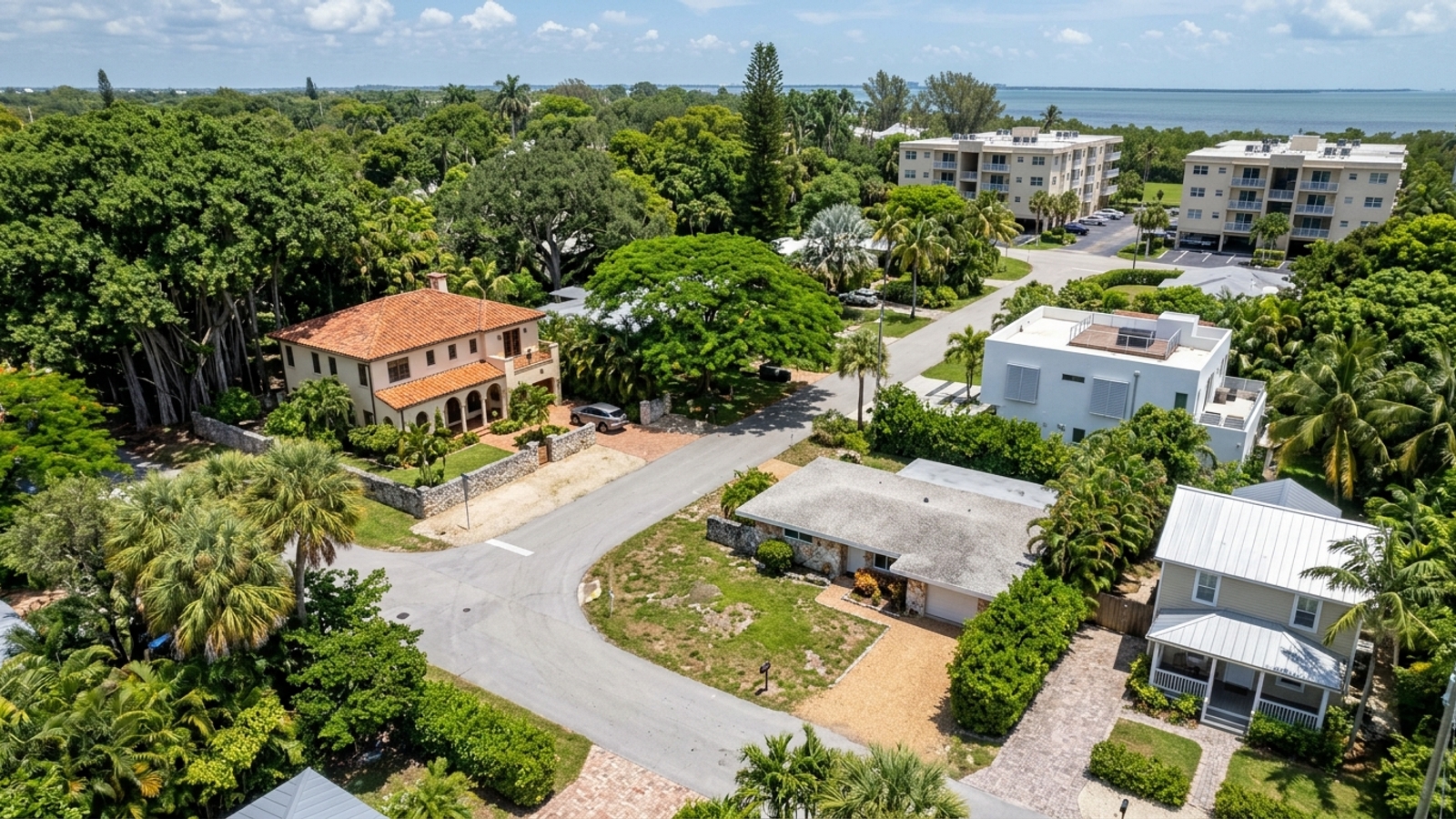
In Coconut Grove, the cheapest way into the neighborhood is not the cheapest space.
Key Takeaway
Coconut Grove is expensive mainly because of housing, and a condo is the lowest-cost way in. Condos sell in a median 143 days, giving you real room to negotiate the price. If you can stretch the down payment, a single-family home gets you more space per dollar and no shared assessment risk, but you carry the insurance and upkeep alone.
Who This Guide Is For
You’re considering a move to Coconut Grove and need to work out whether a condo, townhouse, or house fits your monthly budget before you start touring.
Is Coconut Grove Expensive to Live In?
Housing is the bill here; groceries and gas barely move the answer. Condos are the lowest entry price and give you the most negotiating power on price, but not the most space for your money, so the condo-versus-house choice shapes everything below. The all-homes median of around $664,538 blends bayfront estates with older condominiums, which hides what your actual shortlist will cost. Housing costs are a central factor when evaluating the pros and cons of living in Coconut Grove, FL.
Housing Takes the Largest Share of Your Budget
The down payment and the monthly carrying costs decide whether the area is affordable for you.
Why Condos Cost More per Square Foot
Condos cost more per foot than houses ($566 versus $556), even though the condo median is about $288,000 lower. A smaller check buys less space at a higher unit price. Once you add association dues, the true cost per foot is higher still.
How Far Below Asking Homes Sell
Homes recently sold at 94.6% of list price, about 5.4% under asking. That gap gives you a baseline for offers. Well-priced houses still draw offers over asking, so don’t assume a 5% discount on every listing.
Where Prices Are Rising and Falling
Condo prices slipped over the year while single-family prices rose. That gives condo buyers room to negotiate, while house buyers are paying into a rising market. These are small moves over a single 90-day window, so they don’t guarantee future trends.
Coconut Grove Cost of Living at a Glance
Prices differ across the best neighborhoods in Coconut Grove. The Redfin figures below cover the whole market.
- All homes: median sale price $664,538, up 3.8% year over year (Redfin, 90 days ending Oct. 31, 2026)
- All homes: 975 sold; median 109 days on market; sold at 94.6% of list; 4.7% sold above list (90 days ending Oct. 31, 2026)
- All homes: 13.5 months of supply; 4,288 homes in inventory; median $539 per sq ft (90 days ending Oct. 31, 2026)
- Condos: median sale price $534,855, down 1.5% year over year; median $566 per sq ft (550 sales, 90 days ending Oct. 31, 2026)
- Condos: median 143 days on market; 94.5% of list; 1.1% sold above list; 18 months of supply; 3,224 in inventory (90 days ending Oct. 31, 2026)
- Single-family homes: median sale price $822,581, up 3.5% year over year; median $556 per sq ft (303 sales, 90 days ending Oct. 31, 2026)
- Single-family homes: median 74 days on market; 94.9% of list; 9.8% sold above list; 6.4 months of supply; 629 in inventory (90 days ending Oct. 31, 2026)
- Townhouses: median sale price $1,132,430, down 0.5% year over year; median $597 per sq ft (42 sales, 90 days ending Oct. 31, 2026)
- Townhouses: median 61 days on market; 94.4% of list; 9.9% sold above list; 8.3 months of supply; 112 in inventory (90 days ending Oct. 31, 2026)
Home Prices by Property Type in Coconut Grove
Each home type moves at a different pace, so the competition you face depends on the segment you shop.
Condos
At the current pace, condo supply would take about 18 months to sell, which is firmly a buyer’s market. With 3,224 units in inventory, you can ask for price cuts, seller credits, or repairs. The catch is that the same slow market works against you when it’s time to sell.
Single-Family Homes
Supply sits at 6.4 months, tight by local standards. About one in ten houses sold above asking, compared with roughly one in a hundred condos. You get more space per dollar but less room to negotiate. The catch is a larger down payment and no one to share the repair bills.
Townhouses
Townhouses are the most expensive way to buy space here, with a median sale price of $1,132,430 from 42 sales. This small segment moves relatively quickly. The catch is the highest price per foot, association dues that you often still owe, and few listings to choose from.
Condo Ownership Costs in Coconut Grove
A smaller purchase price comes with shared building bills you don’t control. Check every amount against the specific building’s documents, because these costs can close the gap between a cheaper condo and a pricier house.
Homeowners Association Dues
Dues typically fund the master insurance policy, reserves, staff, amenities, and sometimes water or cable. Ask the association for current dues, the adopted budget, and exactly what the dues cover. Dues rise when the building’s insurance premium or required reserve contributions increase, and owners control neither.
Special Assessments
An assessment is a one-time bill to owners for repairs or budget shortfalls. Ask for any approved or proposed assessments and read the last 12 months of board minutes. An assessment voted after you close becomes your bill, even if the repair need was known before you bought.
Milestone Inspections and Reserve Studies
Florida requires condo buildings three habitable stories or higher to complete structural milestone inspections. A residential condominium association must also complete a structural integrity reserve study at least every 10 years for each such building. Buildings that underfunded reserves in past years are now passing those costs to current owners through higher dues or assessments.
Interior Unit Insurance
The master policy covers the main structure; your HO-6 policy covers your interiors, belongings, and liability. Get quotes during due diligence. If the master policy carries a large hurricane deductible, owners can be assessed their share after a storm, so ask what that deductible is.
Parking, Storage and Amenity Fees
Ask whether an assigned space, extra parking, storage, or amenity access is billed separately from the dues. These charges often aren’t in the advertised fee. As a result, two units with identical dues can cost different amounts each month.
Lease and Pet Rules
Association documents can limit leasing through minimum terms, waiting periods, or caps. If rental income is part of your budget, check the City of Miami short-term rental rules as well as the association’s documents. Restrictive rules shrink your pool of future buyers in a segment that already sells slowly.
House Ownership Costs in Coconut Grove
A house carries no shared assessments, but every storm, roof, and flood bill is yours. That makes the monthly cost hard to predict from the price alone.
Homeowners and Windstorm Insurance
Insurance is often the biggest monthly cost after the mortgage, and wind coverage is a major factor in Miami-Dade. Get quotes during the inspection period, along with a wind mitigation report that may earn discounts. Premiums depend on roof age and storm features, so two houses at the same price can carry very different bills.
Flood Insurance
Lenders on federally backed mortgages require flood insurance in FEMA high-risk flood zones. Look up the property on the FEMA flood map service center and request an elevation certificate and the seller’s flood history. Zone lines can change from one street to the next, so a neighbor’s premium tells you nothing about yours.
Roof Age and Replacement
Confirm the roof’s age and permit history through City of Miami building records. Older roofs can limit insurability or raise premiums. A replacement is a large lump sum that no association shares with you.
Tree Canopy and Yard Upkeep
Mature trees add trimming, storm-preparation, and cleanup costs. In the City of Miami, removing a tree on your own lot requires a city permit unless exempt, and so does pruning more than 25% of a tree’s canopy. Large trees over a roof can mean a trimming bill before hurricane season and a cleanup bill after a storm.
Pools and Seawalls
Pools add equipment, chemical, and electricity costs each month. On waterfront lots, seawall repair is the owner’s cost and can be substantial. Ask for the seawall’s age and condition and for pool service records, and get the seawall inspected before you commit.
Hurricane Shutters and Impact Windows
Confirm whether openings are protected and documented on the wind mitigation report, because that affects both storm preparation and insurance discounts. If protection is missing, adding it is an upfront cost the price doesn’t show.
Property Taxes in Coconut Grove
Coconut Grove is in the City of Miami, so city, county, school, and special-district millage all apply. The city’s operating millage is unchanged at 7.1080 mills for 2026. The total combined rate was 19.9878 mills for 2025 and is expected to stay about the same, just under $20 per $1,000 of taxable value.
Homestead Exemption and Save Our Homes Cap
For 2026, the homestead exemption takes up to $51,411 off taxable value. The Save Our Homes cap limits annual increases in a homesteaded home’s assessed value to the lower of 3% or inflation, which is 2.7% for 2026. Second homes and rentals don’t get the cap, so their bills track market value much more closely.
Why Your Tax Bill Resets After You Buy
Don’t budget off the seller’s bill, because the assessed value resets toward market value after a sale. Estimate your own tax with the Miami-Dade Property Appraiser’s estimator using your purchase price. The reset hits hardest on long-held homes, where sellers have had years of capped increases.
Everyday Expenses in Coconut Grove
These recurring costs move the answer less than housing does.
Rent
If you’re leasing first, check current asking rents for your unit size. Census rent figures lag the market, so treat them as a floor.
Electricity
FPL’s typical 1,000-kWh residential bill in Miami-Dade is $136.64 a month for 2026. Condos often use less power than houses with pools. Ask the seller for 12 months of bills, since summer air-conditioning drives the peaks.
Water, Sewer and Trash
Water and sewer come from the Miami-Dade Water and Sewer Department. From Oct. 1, 2026, the residential water meter charge is $5.36 a month plus usage tiers, and wastewater carries a $9.13 base facility charge. Condo dues may already include water, so compare condo and house budgets like for like.
Groceries and Dining Out
In the Miami-Fort Lauderdale-West Palm Beach metro, the food index rose 2.1% over a recent 12-month period. That metro-wide figure shows the direction of prices, not a local grocery bill. Dining out in the commercial center is a lifestyle choice, not a fixed cost.
Getting Around Without a Second Car
The Coconut Grove and Douglas Road Metrorail stations serve the area, at $2.25 per one-way trip throughout 2026. Map the walk from each home on your shortlist to the nearest station. Much of the area isn’t a short walk from either, so you may still need a car.
Parking
Check Miami Parking Authority rates and permit options near your shortlist. Paid parking in the commercial core adds up if you drive there often, and a condo with no assigned space shifts that cost to you.
Sales Tax and No State Income Tax
Florida has no state personal income tax. Miami-Dade’s combined sales tax rate for 2026 is 7%, including a 1% discretionary surtax. Your pay goes further than in income-tax states, though insurance and property costs can offset much of that.
Monthly Cost Example: Median Condo vs. Median House
This hypothetical compares a median condo with a median house, using a 20% down payment and standard loan assumptions. You’ll need your own insurance and association quotes to get a real number.
The Median Condo
For illustration only: buying the median condo at $534,855 requires $106,971 upfront and a $427,884 loan. To that principal and interest, add:
- taxes at the combined millage above, after the homestead exemption
- your HO-6 quote
- the building’s dues
The total leaves out special assessments, which can arrive at any time and in any amount.
The Median House
For illustration only: buying the median single-family home at $822,581 requires $164,516 upfront and a $658,065 loan. To the mortgage payment, add:
- taxes after the exemption
- homeowners and wind insurance
- flood insurance if required
- a maintenance reserve; a common rule of thumb is 1% of the home’s value per year
The down payment is $57,545 larger, and insurance quotes can swing the monthly total more than the price difference does.
What the Monthly Gap Means
High association dues can narrow the gap between a cheaper condo and a pricier house, while high wind and flood premiums can widen it. Redo the math for each property on your shortlist.
Salary Needed to Live in Coconut Grove
A common lender guideline keeps your housing payment at or below 28% of gross monthly income. These are lender guidelines, not financial advice. Your own down payment and monthly debts change the result.
Income to Buy a Median Condo
To estimate the salary needed, divide the condo’s total monthly payment by 0.28 and multiply by 12. Lenders count association dues in this ratio, so high dues can push the income needed for a condo close to that for a house.
Income to Buy a Median House
Apply the same method to the house’s total monthly cost. Each extra hundred dollars a month in insurance requires roughly $4,285 more in annual gross income. Get the insurance quote before relying on any estimate.
Income to Rent
A common renting guideline is no more than 30% of gross income on rent. Ask landlords what income multiple they require, since many screen at a higher one than that.
Condo or House: Which Fits Your Budget?
Is Your Limit the Down Payment or the Monthly Payment?
If cash up front is tight, start with condos. If the monthly payment is your limit, compare the totals in the monthly cost example first. The condo with the smallest down payment can still have the highest monthly total once dues are added.
Can You Absorb a Surprise Assessment?
If a sudden building bill would strain you, favor well-reserved buildings or houses, and review milestone inspections and reserve studies before shortlisting a condo. A house has no assessments, but a roof or seawall repair is the same kind of sudden bill, paid alone.
Do You Want Room to Negotiate?
Condos give you the most room: only 1.1% sold above list recently, so ask for price cuts or closing cost credits. A well-priced condo in a building with clean finances may still draw competing buyers.
How Long Will You Stay?
A short stay means paying closing costs twice, and for a condo, possibly a long resale. Houses move faster, with a median 74 days on market. If you may need to sell soon, the slow condo market could keep your exit open for months longer.
Ways to Lower Your Housing Costs in Coconut Grove
Target Condos That Have Sat on the Market
Long-listed condos are where price cuts and seller credits are most realistic. A buyer’s agent in Coconut Grove can pull days-on-market history for buildings on your list. Find out why a condo has sat before you offer, since a building problem may be behind the delay.
Read the Budget and Reserve Study Before You Offer
Before negotiating, request the association’s budget, reserve study, milestone inspection status, and recent minutes; what you find can support better terms. Associations can be slow to produce them, so ask early or write the review period into the contract.
Get Insurance Quotes During Due Diligence
Get homeowners, flood, and HO-6 quotes inside the inspection period, using a wind mitigation report to lower them. Wait until the period closes and you may lose the ability to cancel if a quote comes in high.
File for Homestead by the Deadline
If the home is your primary residence, file with the Miami-Dade Property Appraiser by March 1 of the tax year you want the exemption to apply. Missing the deadline means a full year of taxes without the exemption, and the cap’s savings start a year later.
Coconut Grove Cost of Living FAQs
Is Coconut Grove More Expensive Than Coral Gables?
It depends on property type. Compare current Coral Gables medians with the Coconut Grove condo and house medians above, because the answer can differ between the two.
Why Is Coconut Grove So Expensive?
All homes sell for a median $539 per square foot. Drivers include the Biscayne Bay waterfront, older housing on large tree-covered lots, and Metrorail access.
Is $100,000 Enough to Live in Coconut Grove?
That salary allows about $2,333 a month for housing under the lender guideline above. Compare it with current asking rents and the worked-example totals.
Is $60,000 Enough to Live in Coconut Grove?
The rent guideline above leaves $1,500 a month for rent at $60,000 a year. Compare that with current asking rents for the unit size you need.
Can You Live on $3,000 a Month in Coconut Grove?
Set $3,000 against current asking rents and the typical FPL bill above to see what remains for groceries, insurance, and transit.
Does Coconut Grove Flood?
Parts of it sit in high-risk flood zones. Check a specific property on the FEMA flood map service center or the Miami-Dade flood zone lookup.
Is Coconut Grove in Miami-Dade County?
Yes. It’s a neighborhood within the City of Miami, so city and county millage both apply. The Coconut Grove zip code is 33133.
How Much Are Closing Costs in Coconut Grove?
In Miami-Dade, the deed documentary stamp tax is $0.60 per $100 of price, plus a $0.45 county surtax on the same basis that doesn’t apply to a deed transferring only a single-family dwelling. Financed buyers also pay a mortgage stamp tax of $0.35 on the same basis and a 0.2% nonrecurring intangible tax. Your lender’s Loan Estimate shows your exact figures.
Sources
- Redfin: Data Center
- Miami-Dade Property Appraiser: 2026 Proposed Millage Rate Comparison
- Florida Homestead Ledger: Homestead Exemption
- Florida Senate: Statute 553.899
- Florida Senate: Statute 718.112
- FPL Newsroom: Florida Regulators Approve FPL Rate Agreement
- Miami-Dade County: Water and Sewer Rates
- Bureau of Labor Statistics: CPI Miami Area
- Miami-Dade County: Metrorail Fare Update
- US Tax Tools: Florida Sales Tax Rates
- City of Miami: Tree Information Resources
- Florida Department of Revenue: Documentary Stamp Tax



