

 Facebook
 X
 Pinterest
 Copy Link
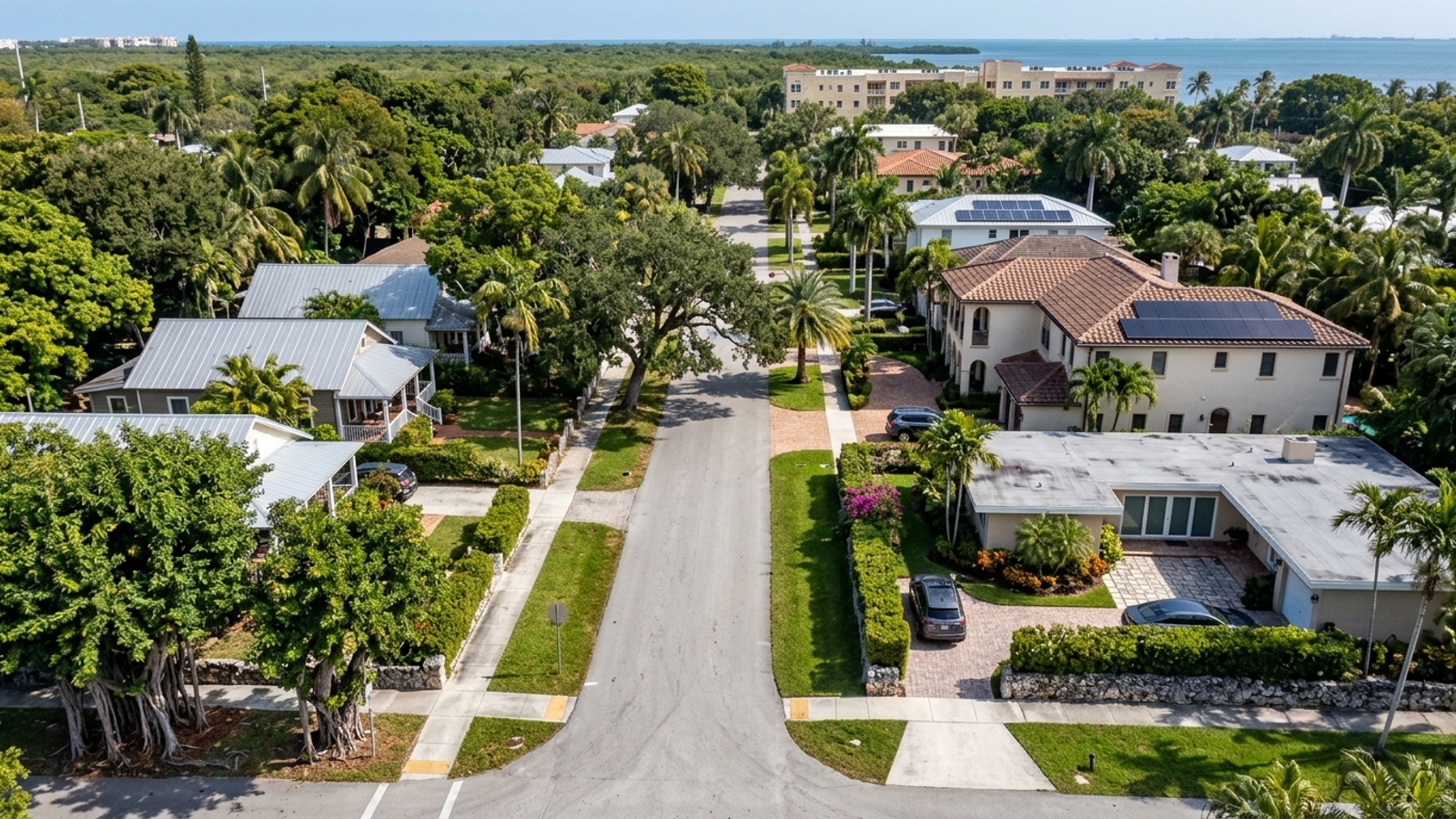
Coconut Grove sits inside the City of Miami, so your utility bills come from a mix of city, county, and private providers. The companies themselves are the same across the neighborhood. What changes is how many of their accounts you manage directly, and that comes down almost entirely to what kind of property you buy.
A condo and a single-family house in the same block can have very different monthly paperwork. A clear utility breakdown lets you budget honestly and ask the questions that matter before you make an offer.
Key Takeaway
Florida Power & Light handles electricity here, and Miami-Dade Water and Sewer handles water. But how many bills you’re personally paying depends on your property type. Condo associations frequently fold water, sewer, and trash into the monthly fee, while a house owner opens each account separately and may inherit a septic tank. If you want the simplest setup, condos give you roughly 18 months of supply to confirm exactly what the fee covers. If you’re shopping for a house, verify the sewer connection before you write an offer.
Who This Guide Is For
You’re weighing a Coconut Grove condo, townhouse, or house and want to understand which utility accounts, fees, and due-diligence checks come with each property type before you make an offer or move in.
- Are you choosing between a condo and a house? Read “Coconut Grove Utilities by Home Type”, then “Comparing Utility Costs Between Condos and Houses” to see which bills each one leaves you with.
- Is the listing unclear about sewer, or is it an older single-family home? Go to “Checking for Sewer, Septic and Private Wells” and run the connection check before you write an offer.
- Do you work from home or need a specific internet speed? Check “Internet, Cable and Phone Providers”. Availability is address by address, and some condo buildings have bulk contracts.
- Are you already under contract? Skip to “How to Set Up Service Before You Move” for the order and timing of each account.
Coconut Grove Utilities by Home Type
Florida Power & Light (FPL), the Miami-Dade Water and Sewer Department (WASD), and the City of Miami are the core providers. Your property type decides how many of them you’re dealing with directly. Condo associations frequently fold water, sewer, and trash into the monthly maintenance fee, while single-family homeowners open separate accounts for each service and track their own usage. The pros and cons of living in Coconut Grove, FL include deciding which of these utility setups you prefer to manage.
The condo market here gives buyers room to do that homework carefully. Condos sit for a median 143 days with about 18 months of supply and close at roughly 94.5% of list price. That pace gives you time and negotiating room to request the association budget and confirm which utilities are listed as common expenses before you commit.
Single-family homes move faster, spending a median 74 days on market with 6.4 months of supply. If you’re shopping for a house, request utility history early. Don’t assume anything transfers from what a condo covers. Ask the association for its current budget and get the utility list in writing.
Electricity Providers and Costs: Florida Power & Light
Florida Power & Light (FPL) is the electric utility for the City of Miami, Coconut Grove included. FPL’s tariff filings explicitly list Miami among the municipalities within Miami-Dade County covered by its service territory.
Under FPL’s Residential Service Rate Schedule RS-1, effective January 1, 2026, the base charge is $10.52 per month. The base energy charge is 7.865 cents per kilowatt-hour for the first 1,000 kWh and 8.865 cents per kWh above that. Bills also carry storm-related charges: a $9.95 Storm Protection Plan Cost Recovery charge appears on a typical residential bill, while the separate Storm Restoration Recovery charge is currently $0.00.
Air conditioning runs most of the year down here. Pool pumps, older single-family construction, and large square footage push usage up fast. Condo units are usually metered individually, so electricity is often the one bill a condo owner still pays directly even when everything else is bundled. Ask the seller to download 12 months of electricity usage from their FPL account, and judge the home on its highest summer month, not an average.
Water and Sewer Service From Miami-Dade County
The Miami-Dade Water and Sewer Department (WASD) supplies municipal water and sewer service to the neighborhood. Sewer charges are calculated based on your metered water use, which means lawn irrigation raises your sewer charge unless the home has a separate irrigation meter.
WASD allows customers to install a separate submeter that measures water not entering the sanitary sewer system, such as irrigation or pool fill water, so you can water your lawn and fill a swimming pool without paying a sewer charge on that water. Many condo buildings are master-metered, with water and sewer paid out of the association budget. Confirm this in the current budget documents.
House owners open their own account and pay based on usage. A house with a large irrigated yard and no irrigation meter is paying sewer rates on water that never comes close to the sewer. It’s worth flagging during due diligence.
Checking for Sewer, Septic and Private Wells
Not every property in Miami-Dade County is connected to the public sewer system. Miami-Dade County’s Connect 2 Protect initiative runs a countywide septic-to-sewer program for homesteaded properties that abut existing sanitary sewer infrastructure, and that includes areas of the City of Miami such as Coconut Grove.
When a home converts to public sewer, WASD’s adopted FY2025-26 schedule sets the sewer connection charge rate at $5.60 per average daily gallon, plus separate plans review and processing fees of $55.00 each. The county estimates a homeowner’s typical out-of-pocket cost to physically connect to the centralized sewer system at approximately $15,000, with a published range of about $10,000 to $20,000. Converting from septic does not require converting a private well to municipal water.
Private drinking-water wells are rare where municipal water is available, so wells here are mostly used for irrigation. Always verify the specific property’s utility connections rather than assuming based on the neighborhood.
How to Check a Home’s Water and Sewer Connection
You can run three checks before or during the inspection period to confirm how a house handles wastewater.
First, look at a recent WASD bill from the seller. A sewer charge appearing on that bill tells you the house is on public sewer rather than a septic tank. Second, search Florida Department of Health septic permit records for the address. Miami-Dade County’s Regulatory and Economic Resources Department maintains an online environmental records search tool that lets you search septic permits by address or folio number. Third, if a septic system turns up, hire a septic inspection alongside the standard home inspection and ask whether an irrigation well exists and has a permit.
Permit records can be incomplete for older homes, so a clean search result isn’t definitive proof. If you want a house without future septic or sewer-connection costs, start with listings where the seller’s water bill shows a WASD sewer charge. Only a physical inspection confirms what’s in the ground.
Trash, Recycling and Stormwater Fees
The City of Miami Solid Waste Department collects curbside garbage, recycling, and bulk trash for single-family and small multifamily homes, billed annually. Larger condo buildings typically contract a private hauler paid from association fees, so ask the association how trash is handled.
The City of Miami stormwater utility fee also applies. Effective January 8, 2026, the base rate is $7.00 per month per residential dwelling unit, covering single-family homes, condos, and townhouses. This fee began appearing on Miami-Dade Water and Sewer bills starting February 1, 2026.
These city fees can arrive on the annual property tax bill rather than as monthly statements. That makes them easy to miss when you’re building a monthly budget. A buyer comparing monthly costs can undercount a house by leaving out fees that only show up once a year.
Natural Gas Availability
Many Miami homes and most condo units are all-electric. Piped gas depends on the specific street. TECO Peoples Gas provides natural gas service to the area, serving approximately 3,000 customers across downtown, Coconut Grove, and Little Havana.
Some single-family homes use propane tanks for cooking, pool heaters, or backup generators. Ask the seller whether the home has piped gas, a leased or owned propane tank, and who the supplier is. A leased tank comes with a supplier contract you may have to take over or terminate.
Internet, Cable and Phone Providers
Broadband availability and speeds vary from one address to the next. Check the FCC National Broadband Map for the exact address to see which providers service the home. Review the Coconut Grove zip codes and 33133 boundaries to see how service areas align with the neighborhood.
Some condo buildings have bulk internet or cable contracts paid through association fees. Ask whether the building has such a contract, which provider it uses, and when it renews. A bulk contract saves you a separate bill, but it locks you into the building’s chosen provider and speed tier.
Comparing Utility Costs Between Condos and Houses
The median condo price in the area is roughly $535,000, while the median single-family home sits around $823,000. Beyond the purchase price, your day-to-day cost of living depends on how your utility accounts are structured.
A condo owner typically pays FPL directly and perhaps an internet bill. Water, sewer, trash, and sometimes bulk internet are folded into the monthly association fee. A single-family house is a different picture: you’re opening accounts with FPL, WASD, the City of Miami for solid waste and stormwater, your internet provider, and possibly a gas or propane supplier. If the house isn’t on public sewer, you’ll also budget for septic pumping at some point.
If you want the fewest accounts to manage, start with Coconut Grove condos where the association budget shows water, sewer, and trash as common expenses. If you want full control over your usage without a shared utility budget that can rise at a board vote, start with single-family homes that have a confirmed WASD sewer connection. Either way: a condo fee that includes utilities can increase at the association’s next budget cycle, so ask directly whether any increase or special assessment affecting utilities is already planned.
How to Set Up Service Before You Move
Start or transfer your FPL service a couple of weeks before closing. After that, open a WASD account if the home isn’t master-metered. Customers can apply via the WASD Self-Service Application online, by phone at 305-665-7477, or at a service center. You’ll pay a deposit of $50 each for water and sewer service, plus a non-refundable $45 service charge, both of which appear on the first bill. Deposits are credited back after two years of good standing.
Confirm whether the City of Miami solid waste fee is already attached to the property, then schedule your internet installation. For condos, ask management which services transfer automatically. Sellers should schedule final utility readings before handing over the keys, and your real estate agent can help you request association budgets and utility history during negotiation.
At a Glance
- All homes, median sale price: $664,538, up 3.8% year over year (975 sales, 90 days ending 2026-10-31)
- Condo, median sale price: $534,855, down 1.5% year over year (550 sales, 90 days ending 2026-10-31)
- Single-family, median sale price: $822,581, up 3.5% year over year (303 sales, 90 days ending 2026-10-31)
- Townhouse, median sale price: $1,132,430, down 0.5% year over year (42 sales, 90 days ending 2026-10-31)
- Median days on market: condo 143, single-family 74, townhouse 61 (90 days ending 2026-10-31)
- Months of supply: condo 18, townhouse 8.3, single-family 6.4 (90 days ending 2026-10-31)
- Sale-to-list ratio: condo 94.5%, single-family 94.9%, townhouse 95.4% (90 days ending 2026-10-31)
- Share sold above list: condo 1.1%, single-family 9.8%, townhouse 9.9% (90 days ending 2026-10-31)
- Median price per square foot: condo $566, single-family $556, townhouse $597 (90 days ending 2026-10-31)
Coconut Grove Utilities FAQs
What Is the Customer Service Phone Number for Miami-Dade Water and Sewer?
Call WASD at 305-665-7477, the same number used to open a new account as described above.
How Much Is a Normal Electric Bill in Coconut Grove?
For 2026, the typical 1,000-kWh residential customer bill from FPL in most of Florida is $136.64 per month. Actual bills depend on the home’s size, age, pool, and air conditioning use. Ask the seller to download 12 months of usage from their FPL account to see the exact costs for a specific property.
Do You Need a Deposit to Start FPL Service in Coconut Grove?
It depends on your credit. FPL uses a credit scoring system to determine whether a new residential customer must pay a deposit. Customers required to pay one must provide a deposit equal to two months of expected electric use at the service address, which sometimes must be paid before service is connected.
Is It Expensive to Live in Coconut Grove?
The median sale price for all homes in the area is approximately $664,538, up 3.8% year over year. Utility costs depend more on the property type you choose than on the location itself. Review the cost of living in Coconut Grove to see how housing, utilities, and daily expenses fit together.
Is Coconut Grove Part of Miami-Dade County?
Yes, Coconut Grove is a neighborhood within the City of Miami, which is located in Miami-Dade County. Water and sewer services come from Miami-Dade WASD. Curbside trash and stormwater fees are managed by the City of Miami.
What Zip Code Is Coconut Grove In?
The primary zip code associated with Coconut Grove is 33133. The neighborhood boundaries don’t match the zip code exactly, so check the exact address when setting up service. Utility providers and internet availability are determined by street address rather than zip code.
Does Coconut Grove Flood?
Flood risk is specific to the individual property. Look up the property’s flood zone on FEMA’s Flood Map Service Center and ask the seller about flood insurance and past claims. The City of Miami funds drainage improvements through a stormwater utility fee that appears on Miami-Dade Water and Sewer bills.
Is It Better to Have a Well or City Water in Coconut Grove?
Most homes in the area use Miami-Dade WASD municipal water for drinking and indoor use. Private wells here are primarily used for irrigation. An irrigation well can lower your municipal water use and save on sewer charges, so confirm with the county whether any existing well is permitted.
Sources
- Redfin: Data Center
- FPL: Electric Tariff Section 7
- FPL: January 2026 Residential Effective Rates, Rules and Regulations
- Florida Power & Light: Florida regulators approve FPL rate agreement
- FPL: Residential Deposits
- Florida Public Service Commission: 2026 Billing Adjustments
- Miami-Dade County: Start or Stop Water Service
- Miami-Dade County: Irrigation Submeters
- Miami-Dade County: Septic to Sewer Assistance
- Miami-Dade County: Environmental Public Records
- Miami-Dade County: 2025-26 Schedule of Fees
- City of Miami: Notice Regarding Stormwater Utility Fee
- TECO Peoples Gas: Update on Natural Gas Pipeline



