

 Facebook
 X
 Pinterest
 Copy Link
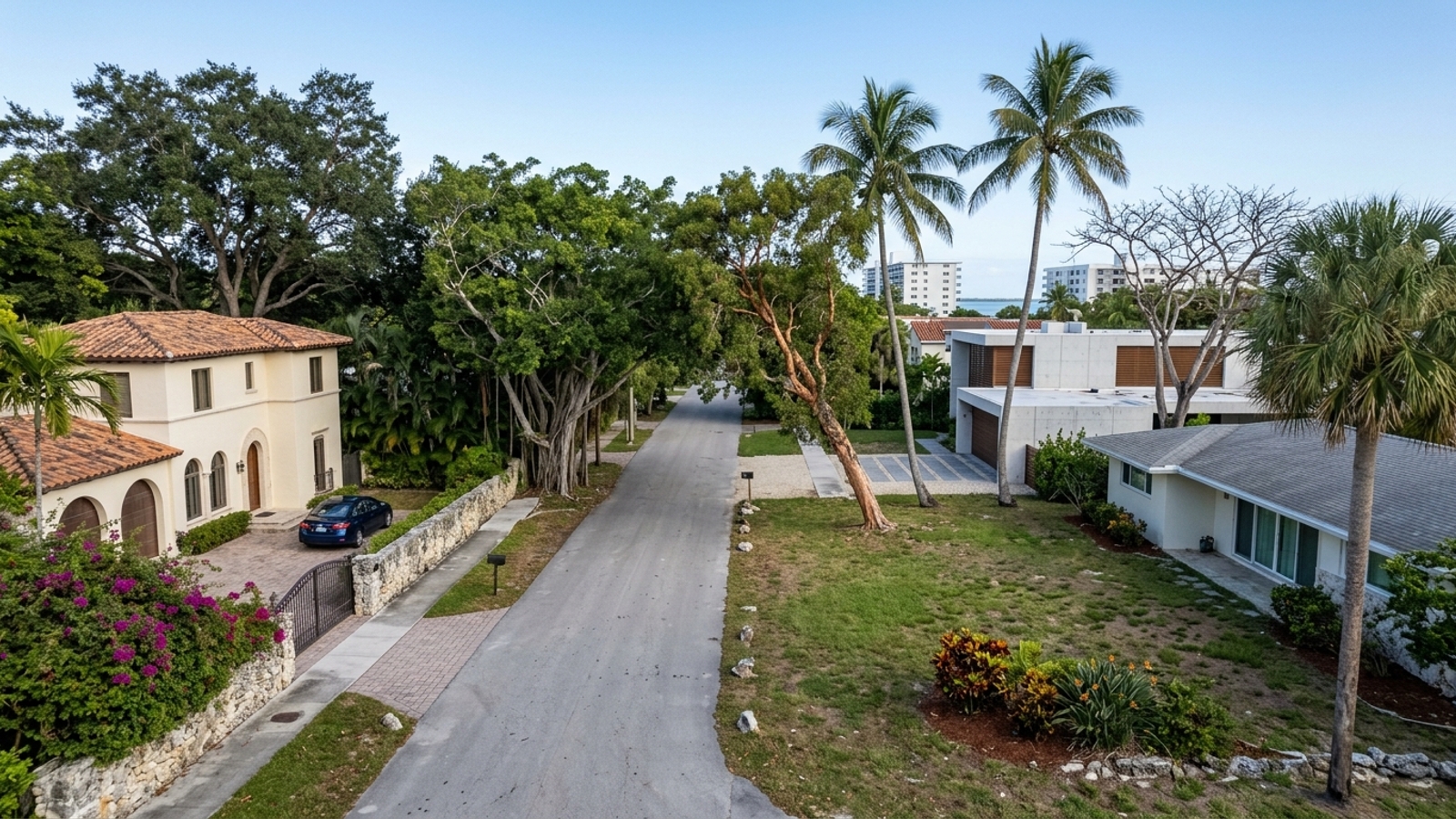
The Coconut Grove, Miami, FL housing market is priced by property type: as of October 2026, median sale prices were about $2.85 million for single-family houses, $1.5 million for condos and $1.58 million for townhomes. If you are buying a home in Coconut Grove, FL, Miami-wide averages will not tell you what to pay here.
Key Takeaway
In Coconut Grove, bargaining power depends on what you buy. Condo buyers can negotiate on price and terms, townhome buyers face the tightest supply, and single-family houses sit in between. Prices are still rising across the neighborhood, so price an offer or a listing against recent neighborhood sales of the same property type.
Who This Guide Is For
It is written for buyers, sellers and investors pricing a house, condo or townhome in Coconut Grove who need neighborhood figures rather than Miami-wide ones.
Coconut Grove Housing Market at a Glance
- Oct 2026 medians: houses $2.85M, condos $1.5M, townhomes $1.58M
- Oct 2026 months of supply: condos 8.3, houses 4.9, townhomes 1.3
- Oct 2026 median days on market: houses 44, townhomes 50, condos 70
- Oct 2026 price per square foot: condos $1,505, houses $1,464, townhomes $811
- Mid-2026 sub-area prices up 15% to 29% year over year
Current State of the Coconut Grove Market
Months of supply measures how long current listings would take to sell at the recent sales pace if no new listings came on. By that measure, Coconut Grove had three separate markets as of October 2026:
- Condos had about 8.3 months of supply, a buyer’s market.
- Single-family houses sat at 4.9 months, which is balanced.
- Townhomes had just 1.3 months, a seller’s market.
The top of the market behaves differently again. In mid-2025, homes priced between $6 million and $10 million were running near 12 months of inventory, which favored patient buyers at that level.
How Coconut Grove Compares to the Broader Miami Area
The MIAMI Association of Realtors reports monthly figures for Miami-Dade County as a whole rather than for the City of Miami. In July 2026, the county figures were:
- Single-family homes: 4,275 for sale at a median sale price of $685,000, with 45 days to contract and 4.8 months of supply.
- Condos: 11,324 units for sale at a median of $400,000, with 86 days to contract and 12 months of supply.
Against those figures:
- Coconut Grove medians are about four times the county’s for both houses and condos.
- Grove houses sell at roughly the county’s pace and supply level.
- Grove townhomes run far tighter than the county’s single-family market.
- Grove condos are less oversupplied than county condos and sell faster.
The county counts days to contract while the Grove figures count days on market, so treat the speed comparison as rough.
Home Prices in Coconut Grove
The medians in the opening cover the 12 months of sales to October 2026. Averages run higher. The average single-family sale price was $4,366,768, because a small number of ultra-luxury sales pull the average up while the median stays at the middle sale. For a typical house, the median is the better guide.
Other sites show different numbers. Redfin-based data put the overall or single-family median near $2.6 million in mid-2026, and Realtor.com put the neighborhood median at $2.5 million in February 2026. The gaps come from different boundaries, time windows and property mixes. Compare like with like: the same provider, the same property type and the same time window.
Price Per Square Foot by Property Type
Over the 12 months to October 2026, single-family houses sold for about $1,464 per square foot, condos for $1,505 and townhomes for $811. Townhomes give the lowest cost per foot, which matters when comparing layouts. A Redfin-based mid-2026 estimate put single-family homes near $909 per square foot. As with medians, benchmark a listing against a single provider’s figures.
Recent Trends in Coconut Grove Real Estate
Prices are not falling on current data:
- Southwest Coconut Grove’s median rose 15.0% year over year in the three months ending June 2026.
- Northeast Coconut Grove’s median rose 28.8% in the three months ending August 2026.
- One single-family analysis found prices 30.8% above where the market finished 2025.
- A Redfin-based single-family estimate showed a rise of about 52.7% in mid-2026.
Coconut Grove is a small market, so a handful of high-end sales can swing these percentages sharply. The range matters more than any one number. Do not apply one sub-area’s figure to all of 33133.
Inventory and Days on Market
As of October 1, 2026, 274 homes and condos were for sale in Coconut Grove, including 141 condos, 74 houses and only 10 townhomes. Some sites show far higher counts, such as 2,315 listings, likely because they draw a wider boundary than the neighborhood.
Over the trailing 12 months, houses had a median of 44 days on market, townhomes 50 and condos 70.
Looking Ahead: Forecasts and Expectations
MIAMI REALTORS’ Southeast Florida Housing Outlook, updated in December 2025, gives these projections:
- Single-family homes: median sale prices rise about 2.8% through 2026 and 3.5% in 2027.
- Condos and townhomes: prices dip about 0.5% in 2026, after a 4.1% decline in 2025.
Realtor.com’s 2026 forecast, cited in the same release, has Miami metro prices rising 1.1%, while most Florida metros are projected to decline.
Income, Affordability and Ownership Costs in 33133
The median household income in ZIP code 33133 is $103,420, according to 2020-2024 American Community Survey five-year estimates. That compares with $71,753 for Miami-Dade County. Average household income in the area is reported at about $185,000 to $190,000.
Beyond the purchase price, owners pay these recurring costs:
- Property tax: Coconut Grove is part of the City of Miami, so owners pay city taxes on top of county, school board and special district taxes. For the 2025 tax year, the combined rate was 19.9878 mills, about $1,999 per $100,000 of taxable value. The city’s share of that is 7.1080 mills. On a $2.85 million house taxed near its sale price, the bill comes to roughly $57,000 a year before exemptions. Check a property’s actual bill on the Miami-Dade County Property Appraiser’s site.
- Homestead savings: If the home is your permanent primary residence, Florida’s homestead exemption removes at least $50,000 from its assessed value. The first $25,000 applies to all taxes. The second applies only to non-school taxes on assessed value above $50,000. After that, the Save Our Homes cap limits yearly increases in assessed value to 3% or the prior year’s change in the Consumer Price Index, whichever is lower.
- Flood insurance: Much of Coconut Grove lies in FEMA flood Zone AE, particularly the bayfront blocks and lower-lying interior streets. Lenders require separate flood insurance in that zone. Ask for a property’s flood zone before you make an offer.
- Association dues: Condos and townhomes carry monthly dues that vary by building. Ask for the current amount and the association’s budget.
Practical Advice for Buyers and Sellers
Condo sellers should plan for a longer timeline. With so many competing condo listings, pricing and presentation matter more than in a tighter segment.
Townhome buyers should move quickly. At 1.3 months of supply, hesitation costs deals, so work with a local Miami agent who can flag new listings the moment they hit.
Condo buyers and sellers also face Florida’s post-Surfside rules:
- Reserve study deadline: Under Fla. Stat. §718.112(2)(g), associations must complete a structural integrity reserve study (SIRS) at least every 10 years for buildings of three or more habitable stories. The first one must be done by December 31, 2026.
- Reserve funding: For budgets adopted on or after December 31, 2024, owners generally can no longer vote to waive or reduce reserves for those items, apart from narrow exceptions. Associations must build full reserves or borrow, which often brings large special assessments.
- Seller disclosures: Under §718.503, sellers must give buyers the most recent SIRS or a statement that none exists. Contracts must also disclose a missing milestone inspection or study.
These disclosures can affect financing, pricing and negotiation. Buyers should request the building’s inspection and reserve study status, plus any pending assessments, before making an offer. Sellers should have those documents ready.
Timing Your Sale or Purchase
A MIAMI Realtors seasonality study found that Miami-Dade sales activity typically ramps up in January and peaks in May. New listings are usually most plentiful in the first quarter and lowest in December, so buyers see the widest choice early in the year.
Buyers may find more room to negotiate on single-family homes that have sat past the median days on market, since those sellers tend to be more realistic. Sellers should price against comparable sales from the past three months. Overpricing in a segment with high supply leads to extended days on market, and a listing that lingers develops its own stigma.
Finding Homes and Condos in the Area
Searching here starts with one choice: the lower-maintenance lifestyle of a high-rise condo or the privacy of a historic single-family home.
Renting first is a reasonable way to get a feel for the area before a multi-million-dollar purchase. Niche.com lists the median rent in Coconut Grove at $2,144 a month, against a national median of $1,413. Other rental sites report anywhere from about $2,200 to over $4,000 a month, depending on method, unit mix and boundary, so treat any single figure as approximate.
Frequently Asked Questions
Is Coconut Grove Part of the City of Miami?
Yes. Coconut Grove is a neighborhood within the City of Miami, not a separate city, so owners pay City of Miami property taxes and use Miami city services.
Which ZIP Codes Cover Coconut Grove?
Most of Coconut Grove is in ZIP code 33133, which also takes in parts of Coral Way and Coral Gables. A small part of the neighborhood falls in 33129, and some sources also link parts of it to 33146, a Coral Gables-area code. When searching listings, filter by the neighborhood boundary rather than by ZIP code alone.
How Common Are Cash Purchases in Coconut Grove?
Cash made up 35.2% of Miami-Dade closed sales in September 2025, against about 30% nationally. That month, cash buyers accounted for 46.5% of county condo sales and 23.2% of single-family sales. A financed buyer competing for a house or townhome should offer a strong pre-approval and shorter contingencies to stand up to cash offers.
Will I Need a Jumbo Loan to Buy in Coconut Grove?
With medians of $1.5 million and up for every property type, most financed purchases here exceed the conforming loan limit for Miami-Dade County. That leaves jumbo financing or cash. Jumbo loans usually require a larger down payment and more cash reserves than conforming loans.
Sources
- Miami Real Estate Market July 2026, Allioo
- Southeast Florida Housing Outlook, MIAMI REALTORS (Dec 2025)
- Miami-Dade Sales and Cash Share, MIAMI REALTORS (Oct 2025)
- ZIP 33133 Household Income, Miami-Dade Matters (ACS 2020-2024)
- 2026 Proposed Millage Rate Comparison, Miami-Dade County Property Appraiser
- Save Our Homes and Homestead Exemption, Hillsborough County Property Appraiser
- Coconut Grove Flood Zones and Zoning, Ginard Studio
- Florida Statutes §718.112, Florida Senate
- Coconut Grove Median Rent, Niche
- Coconut Grove, Wikipedia



